Opens in a new window
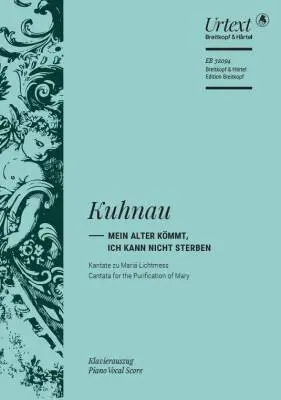
Breitkopf & Hartel Mein Alter Kommt, Ich Kann Nicht Sterben - Kuhnau - Vocal Score - SATB Accompanied Mein Alter Kommt, Ich Kann Nicht Sterben - Kuhnau - Vocal Score - SATB Accompanied
Breitkopf & Hartel
Additional Photos:

Related Products
Description
- Composer/Author: KUHNAU, JOHANN
- Instrumentation: SATB ACCOMP
- Model # EB32094
Composer: Johann Kuhnau
Format: Vocal Score
Voicing: SATB Accompanied
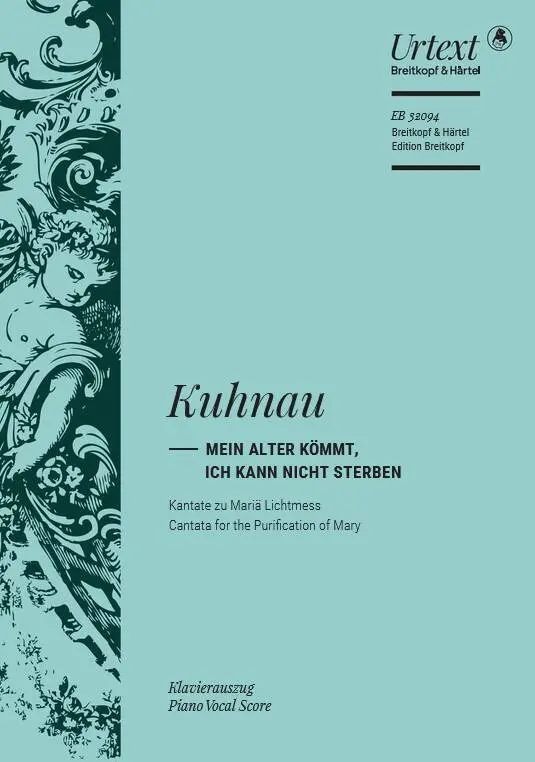
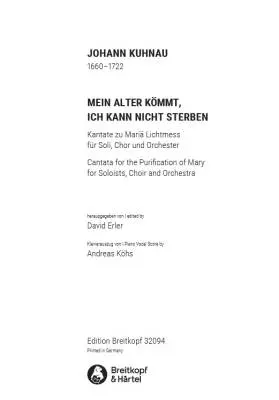
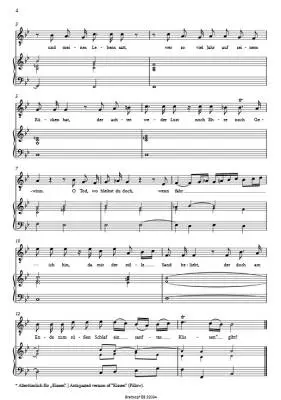
The surviving material of the cantata Mein Alter kommt, ich kann nicht sterben provides no information about its purpose or the time of its composition. On the title page of the autograph set of parts, only the performance dates of the Furstenschule Grimma from 1696 to 1703 are noted. However, the editor was able to identify a poem by Christian Weise from 1682, which was remarkable for its time, as the text source. It contains the remark "an Lichtmesse," the cantata is therefore intended for the end of the Christmas season.
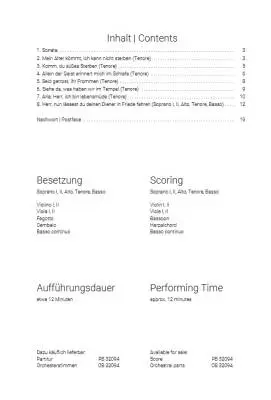
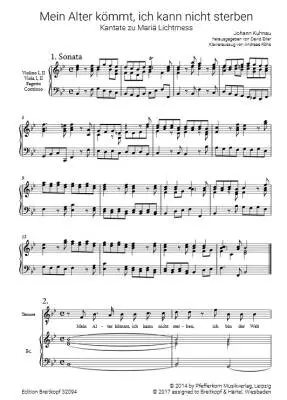
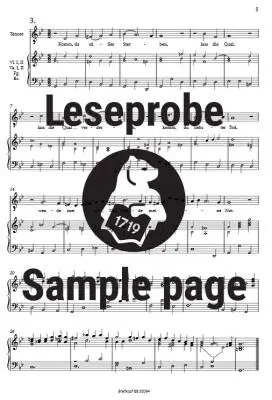
After an introductory sonata, the cantata is composed for tenor solo throughout. The tenor is accompanied by the harpsichord as a continuo instrument the whole time, which is unique in Kuhnau's surviving cantatas and gives the expressive work the feeling of chamber music. Only in the last movement, in which the song of Simeon is set to music, five vocal parts are written, possibly to be performed by a choir. For the sonata and the final movement, an organ was additionally used at the performances in Grimma.
Format: Vocal Score
Voicing: SATB Accompanied
The surviving material of the cantata Mein Alter kommt, ich kann nicht sterben provides no information about its purpose or the time of its composition. On the title page of the autograph set of parts, only the performance dates of the Furstenschule Grimma from 1696 to 1703 are noted. However, the editor was able to identify a poem by Christian Weise from 1682, which was remarkable for its time, as the text source. It contains the remark "an Lichtmesse," the cantata is therefore intended for the end of the Christmas season.
After an introductory sonata, the cantata is composed for tenor solo throughout. The tenor is accompanied by the harpsichord as a continuo instrument the whole time, which is unique in Kuhnau's surviving cantatas and gives the expressive work the feeling of chamber music. Only in the last movement, in which the song of Simeon is set to music, five vocal parts are written, possibly to be performed by a choir. For the sonata and the final movement, an organ was additionally used at the performances in Grimma.
Q & A
There are currently no questions for this product.
Reviews
There are currently no reviews for this product. Be the first to write one!
Reserve in Store

| Product | SKU | Qty |
|---|---|---|
| Mein Alter Kommt, Ich Kann Nicht Sterben - Kuhnau - Vocal Score - SATB Accompanied | 847001 |