Gear Hunter
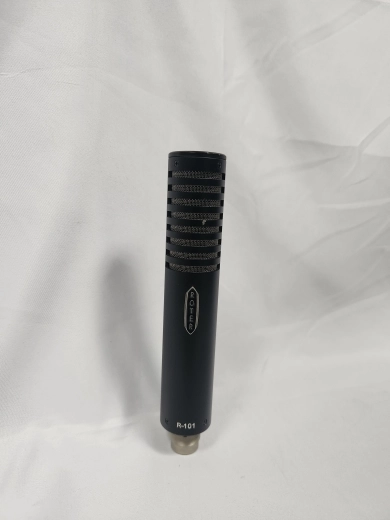
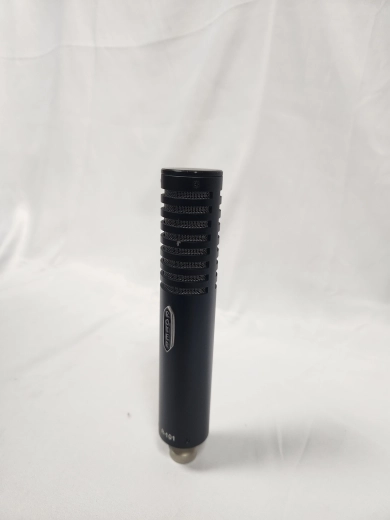
Royer - RO-R101
Buy From Store
Quantity Available: 1
Condition: Used
Pick up at the store only. Contact Mississauga Ontario
This product may not come in original packaging.
Description
The R-101 is a mono, passive ribbon microphone utilizing a patented offset-ribbon transducer and a 2.5-micron ribbon element. This microphone is designed for studio work and demanding live applications (particularly live electric guitar and brass). It incorporates many features pioneered by Royer Labs, including an advanced multi-layered wind screen for superior protection from air blasts and plosives, the patented offset-ribbon transducer, an internally shock mounted ribbon transducer system which provides greater isolation from shocks and vibrations, and reduced proximity effect for closer miking with less bass buildup.
The ribbon element's smooth frequency response and phase linearity impart a warm, analog feel to digital recordings, where the depth and realism on playback feels more like tape rolling than digits being computed. A perfect choice for electric guitars, brass instruments and drums, the R-101's figure-8 pattern also conveys superb ambience and depth when used for room miking applications.
Patented Offset Ribbon Technology
The R-101 incorporates Royer's patented offset-ribbon technology and a low mass, 2.5-micron aluminum (99.9% pure) ribbon element. The ribbon transducer's flux-frame and rare earth Neodymium magnets create a powerful magnetic field which increases sensitivity while reducing stray magnetic radiation.
The R-101's offset-ribbon transducer (Patent # 6,434,252) positions the ribbon element towards the front (logo) side of the microphone body. This proprietary arrangement gives the ribbon element more room to move within the prime magnetic field and maintain full frequency response during high SPL recordings. It's an integral part of the magic in all Royer R-series microphones.
The offset-ribbon transducer also gives you the option of a brighter response when recording lower SPL sound sources on the back side (3 feet and closer; phase reversed in this position). The back side of the mic is often preferred on vocals, acoustic guitars and other stringed instruments.