


How to Tune a Violin
The violin is an instrument renowned for its exquisite and emotive sounds. It relies heavily on precise tuning to produce its characteristic tone and sound.
Tuning a violin involves adjusting the four strings tuned in perfect fifths. This process is essential to maintain the instrument's tonal quality and ensure it produces the desired notes accurately.
Proper tuning is crucial for musicians who play in an ensemble, ensuring that multiple instruments blend seamlessly to create a cohesive musical experience. One person in the ensemble playing out of tune affects the sound of the whole group.
This guide explains the four strings of a violin, two different tuning methods, and answers frequently asked questions.
Notes of a Violin
Before you can start tuning your violin, it’s important to know what notes you need to tune your instrument to.
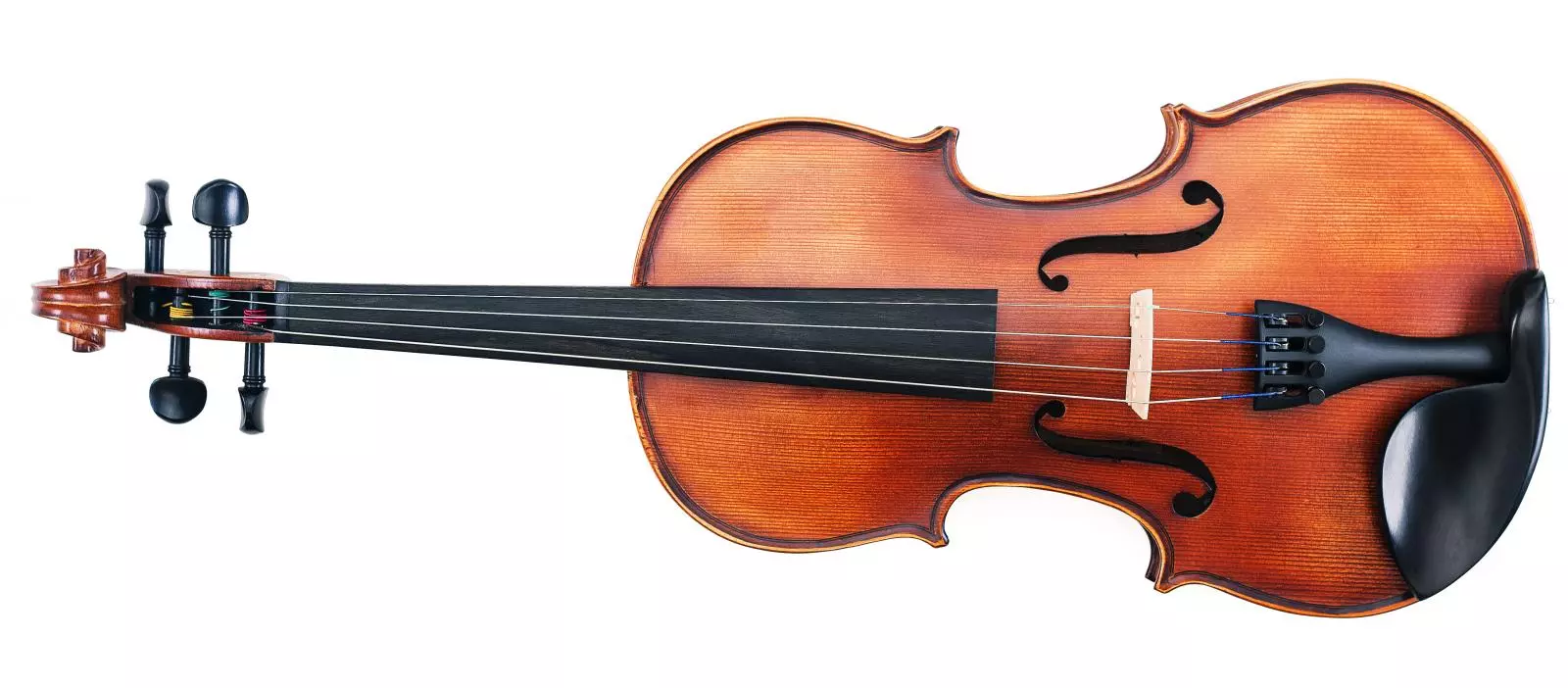
Looking directly at a violin, the four strings in standard tuning from left to right are:
- G note
- D note
- A note
- E note
A standard violin has 4 strings, but other-size violins can have five, seven, or even eight strings.
The G string is the thickest and the E string is the thinnest. Each string produces distinct tones that contribute to the violin's rich sound palette. Recognizing the sound of each string is essential for mastering the instrument and identifying tuning issues.
Most violins are tuned to G-D-A-E, but some fiddlers use alternate tunings such as Open G, Cajun Tuning, and Old-Timey D.
How to Tune a Violin
There are two primary mechanisms for changing the pitch on your violin:
- Tuning the pegs
- Using a fine tuner
Using the Pegs to Tune a Violin
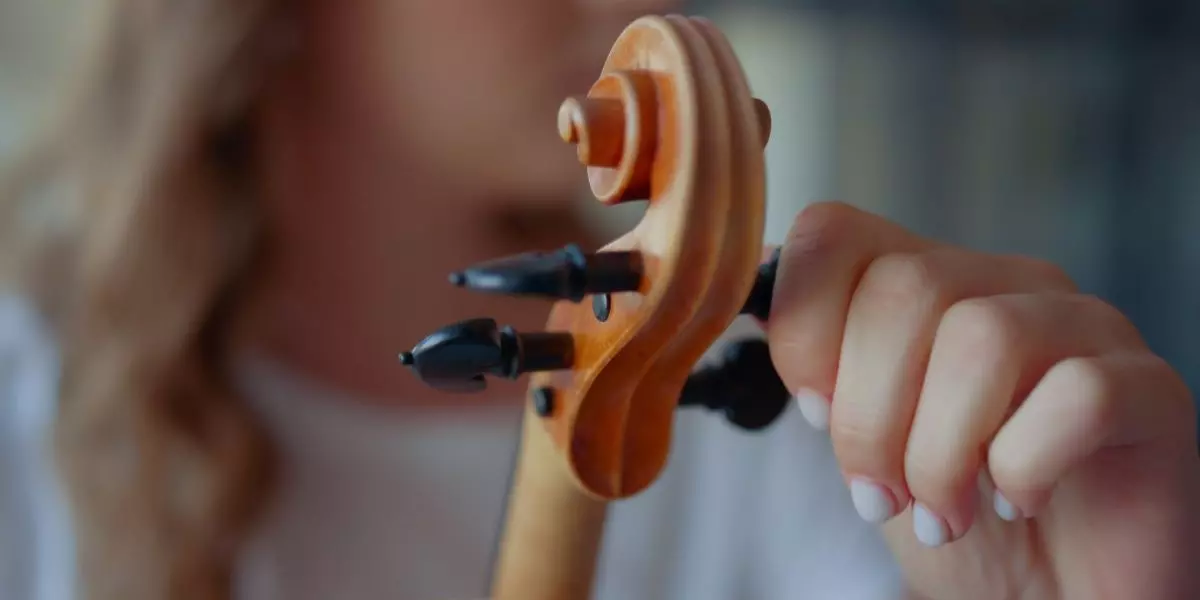
The pegs sit at the top of the violin. Turning the pegs increases or decreases string tension, which alters pitch. Adjust the pegs slowly to avoid damaging the strings or the instrument.
During re-stringing or large adjustments, use the pegs to get close to the desired pitch. Once close, switch to the fine tuners near the tailpiece to complete the tuning.
Using the Fine Tuners to Tune a Violin
Fine tuners enable small, precise adjustments without requiring large peg movements. They make tuning easier, especially for beginners.
Turn the tuner dial clockwise to raise the pitch and counterclockwise to lower it. Turning too far clockwise will overtighten the string; too far counterclockwise can cause the tuner to fall out, which can simply be reinserted.
Mastering both pegs and fine tuners is essential for maintaining accurate tuning.
Tuning Methods
Once you understand how to adjust pitch, you can choose a tuning method that fits your preferences. The two most common methods are:
- Using a piano or other tuned instrument
- Using an electronic tuner
Using a Piano to Tune a Violin
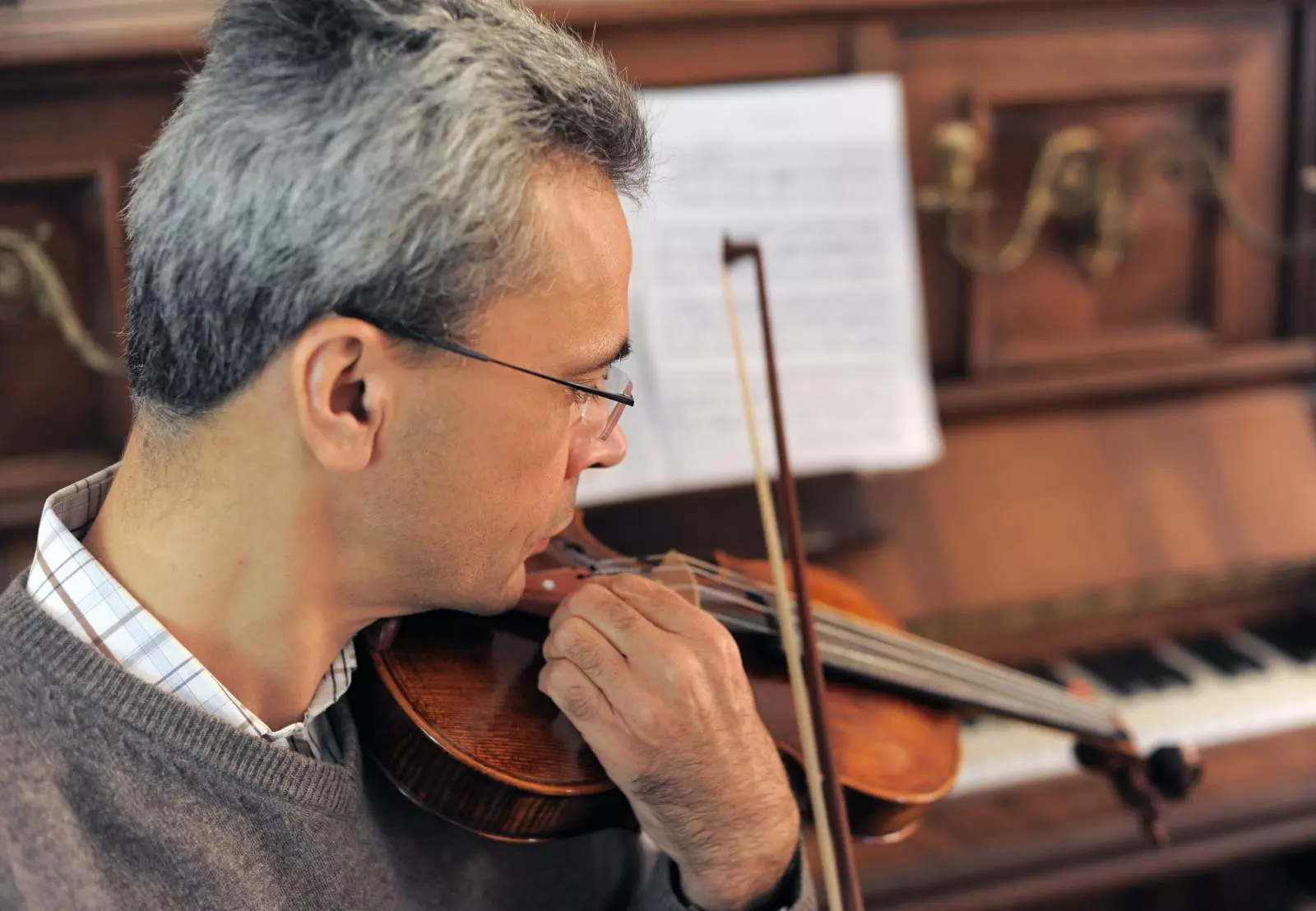
To tune with a piano, play the reference notes and listen for pulsing beats that indicate pitch differences. Adjust string tension gradually using fine tuners until the beats disappear.
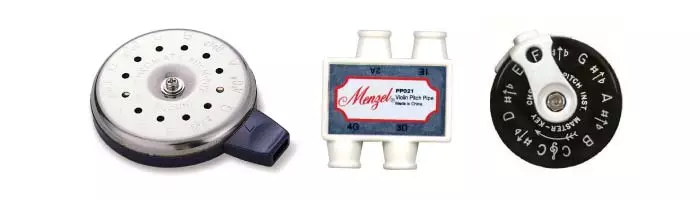
A pitch pipe can also provide reference notes, though it requires a well-trained ear. With experience, you will eventually be able to tune your violin completely by ear.
Using an Electronic Tuner to Tune a Violin
Electronic tuners are the most convenient and accurate tuning method. They detect pitch and indicate whether a note is sharp, flat, or in tune.
Most tuners have an LED screen or indicator lights that display pitch accuracy. Adjust string tension accordingly until the tuner confirms the correct pitch.
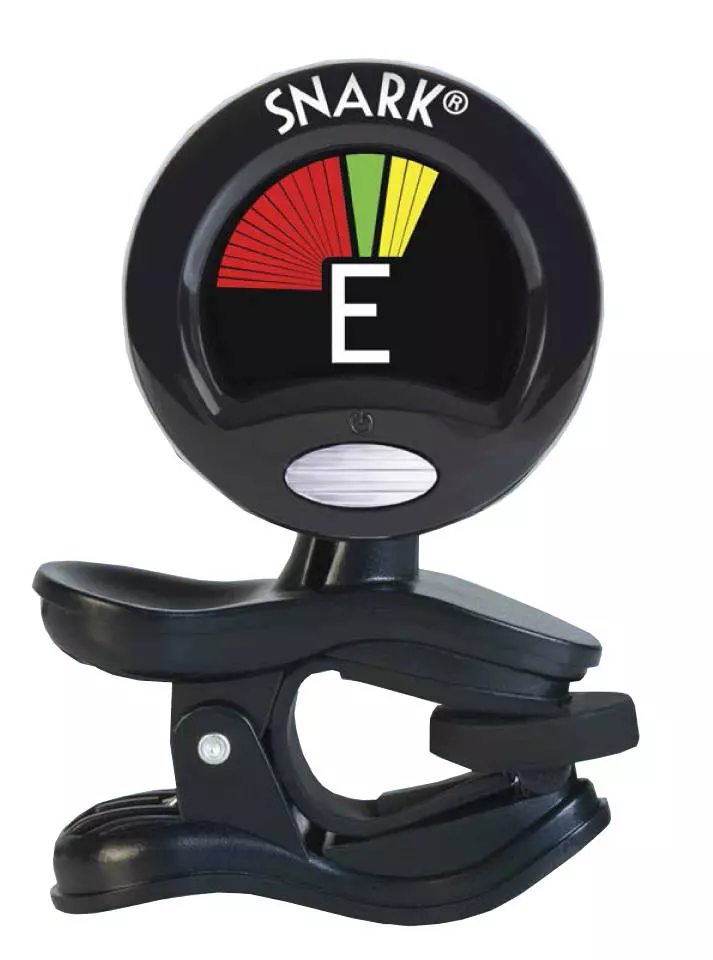
The Snark violin tuner is affordable, accurate, and easy to use.
Learning to tune your violin is essential to achieving the correct sound. Regardless of your skill level, there is a tuning method that will support your goals.
Click here to explore electronic tuner options.
With the fundamentals of tuning established, you can move on to other key skills, such as reading sheet music, finger placement, time signatures, and proper instrument hold. Long & McQuade offers violin lessons at various locations. Find a location near you and start learning today.
Violin FAQs
When was the violin invented?
Variations of bowed string instruments date back to the 7th century. The modern violin emerged in 16th-century Italy, crafted by Gasparo da Salò and Andrea Amati.
How many strings does a violin have?
A traditional violin has four strings tuned to G, D, A, and E. Some violins include additional strings, up to seven.
What is the difference between a fiddle and a violin?
They are the same instrument, but used differently depending on the musical style. A violin typically refers to classical contexts, while a fiddle refers to folk or country playing.
How much does a violin cost?
Beginner violins average around $300. Intermediate models range from $500 to $2000. Professional violins start around $2500 and can exceed $10,000.