A Complete Guide to Synthesizers
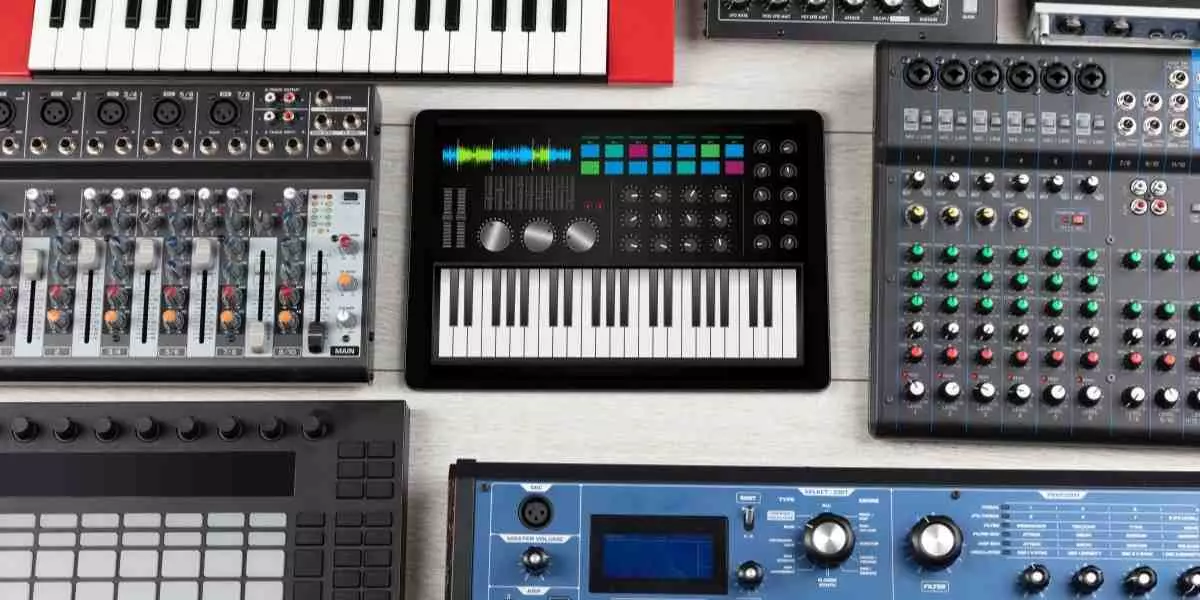
At first glance, purchasing and understanding a synthesizer can be overwhelming. Synthesizers have multiple knobs and switches, use terminology you may not understand, and have numerous menus on a small screen.
This article will serve as a guide to answer all synthesizer-related questions. We will be looking at:
- What is a synthesizer?
- The different types of synthesizers and their key differences
- How a synthesizer works
- Analog vs digital synthesizers
- Software & Plugins
- Recommended synthesizers for every musician's level
What is a Synthesizer?
A synthesizer is "an electronic apparatus that generates audio signals." These signals, or waveforms, can be generated through analog circuits or digital signal processing (DSP) to form sounds. DJs and sound designers use synthesizers to produce electronic music.
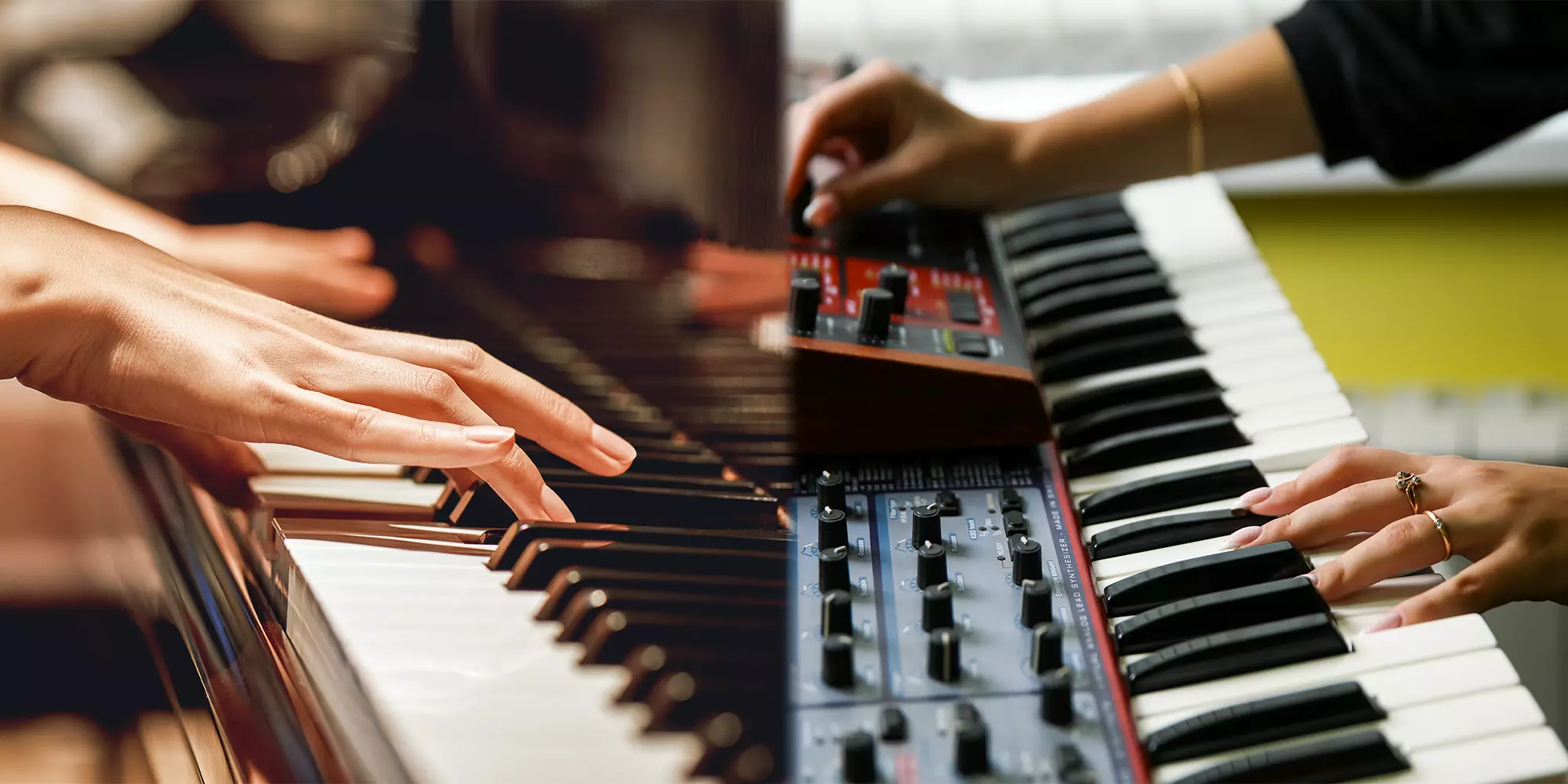
Synthesizers, like pianos, can have a conventional keyboard with up to 88 keys. Synths can also be desktop modules that house the synth's circuitry. These modules can have a built-in pseudo-keyboard. You can also control them with an external keyboard, like a MIDI controller.
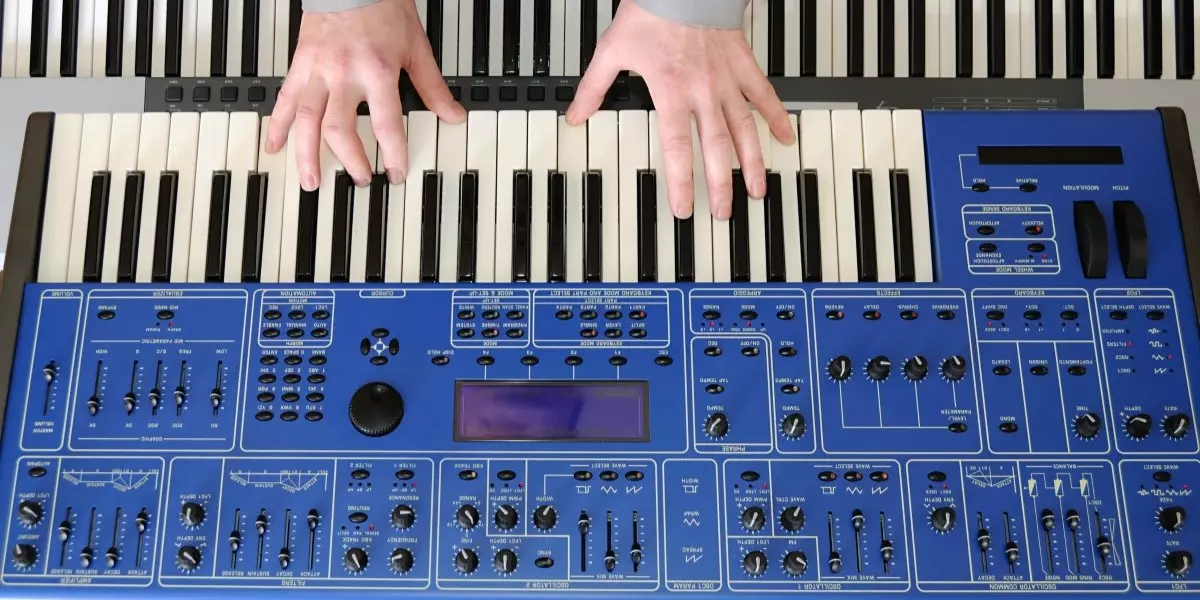
Synthesizer vs Keyboard
Despite what people may think, a synthesizer is different from a keyboard. A keyboard is a musical instrument, while a synthesizer isn't necessarily a musical instrument. Synthesizer keyboards exist, but not all keyboards have synthesizers, which are not required.
Synthesizer Types
Three subtypes of synthesizers within the analog and digital realms determine how sounds form:
- additive, where you build a sound from scratch by combining waveforms from a wavetable
- subtractive, where you use filters and modulation to shape sounds
- frequency modulation, or FM, which uses blocks called operators to manipulate waveforms
In this article, we'll focus on subtractive synthesizers. Most manufacturers make subtractive analog and digital synthesizers because they are beginner-friendly. Additive/wavetable synths and frequency modulation synths are more advanced.
Synthesizer Signal Flow
Understanding how a synthesizer makes sound is the first step to learning the basics. The process begins with sending the audio signal from point A to point B. When you press a key, a signal goes through four stages. These four stages come together to make up a synth's voice:
- The Oscillator is voltage-controlled/digitally-controlled (abbreviated as VCO/DCO) and generates sine, sawtooth, triangle, square, or a combination of those waveforms. Sometimes, it creates a different kind of noise entirely. A synth can have one or several oscillators; the more oscillators you can access, the more complex a sound you can craft. Voltage-controlled oscillators can be tuned to different octave ranges or to unison notes.
- Filters shape the character, or timbre, of the sounds generated by the oscillator by filtering out a waveform's harmonic content. If you're familiar with a graphic equalizer, a filter behaves similarly by selectively removing those harmonics at a set cutoff. High-pass filters take out harmonics below the cutoff, low-pass filters take out harmonics above the cutoff, and band-pass filters combine the two. Once the resonance is set, it accents specific harmonics at a set point. Like oscillators, they can be voltage- or digitally-controlled (VCF/DCF).
- Envelope Generators (EG) further shape a synth sound by telling certain functions how to behave when you press the key. They have four states, abbreviated as ADSR:
- Attack: the time it takes for the envelope to open when the key is pressed
- Decay: the time between the attack and the sustain
- Sustain: the maximum state of the envelope
- Release: the time it takes for the envelope to close after the key is released
- Amplifiers (VCA/DCA) are the final stage before the sound goes out. This is where the sound is amplified loud enough to be sent to a mixer, a speaker, or headphones. Other parallel functions in the signal path that further manipulate the sound include:
- LFO, or low-frequency oscillator, which changes an assigned parameter at a constant rate and depth
- Pitch Bend and Modulation wheels, which shift pitch and add modulation
- Sequencers and arpeggiators that play pre-programmed or repeating note patterns
One Synth, Many Voices
A music synthesizer's voice is the path from the oscillator to the amplifier. The more voices a synth has, the more you can create sounds and chords that entirely use the synth. The advantage of a synthesizer is its creative ability to make unique sounds.
Monophonic
Monophonic has one voice and, therefore, one signal path. Monosynths can have multiple oscillators, but both are triggered with each key press. If you press a key while another is pressed or still ringing, the new note replaces it. An example of a monosynth available today is the Korg Mini Monophonic Analog Synthesizer.
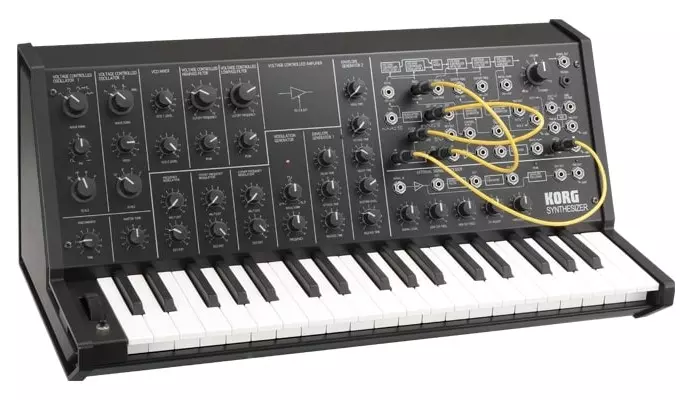
Korg Mini Monophonic Analog Synthesizer
Paraphonic
Paraphonic synths expand on monosynths by allowing you to play two notes, effectively triggering multiple oscillators with each key press. However, there's still only one voice, so you remain limited to that single signal path. The Moog Matriarch 4 Note Paraphonic Analogue Synth is an example.
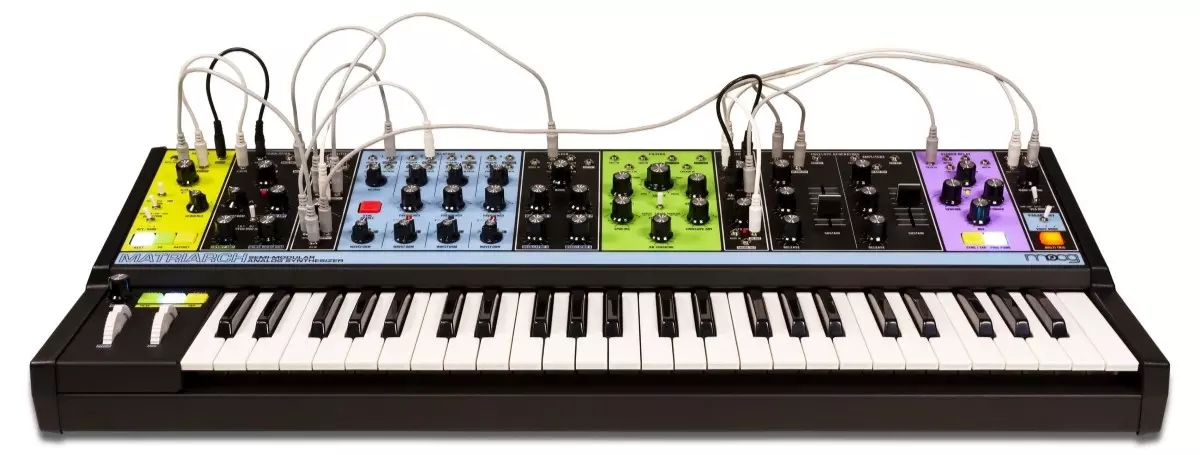
Moog Matriarch 4 Note Paraphonic Analogue Synth
Polyphonic
Polyphonic synthesizers are the most common and most versatile. Polyphonic synths allow you to build more complex sounds. More voices equal more signal paths. For example, a 16-voice synth has 16 paths, and all oscillators have access to those. Most synths today are designed this way. The Modal Electronics Argon 8 is an example.
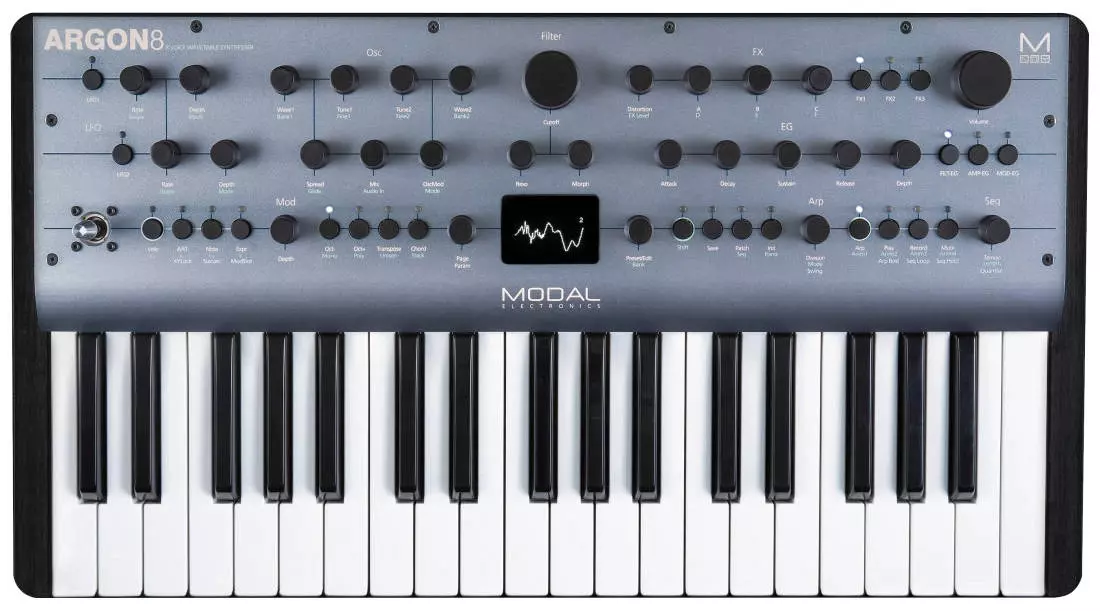
Modal Electronics Argon 8 37-Key Polyphonic Wavetable Synthesizer
Analog vs Digital Synthesizers
Inevitably, the most frequently asked question is which one is better, analog or digital? The answer is that it depends. Both analog and digital synthesizers have a lot to offer. The right fit depends on your needs and budget.
Many musicians value the warmth of analog synthesizers. Their complex circuitry makes them more expensive and physically larger. The Sequential Prophet series is a good example.
Digitally controlled synths retain analog warmth but with condensed wiring and DSP, enabling more features, more polyphony, smaller footprints, and lower cost. Arturia's Micro Freak and Mini Freak exemplify this.
Software Editors and Plugins
Musicians do not need to rely solely on hardware. Modern workflows integrate computer-based tools. Software editors can be installed on a computer and connected via USB to your synth, providing easier access to features normally buried in deep menus.
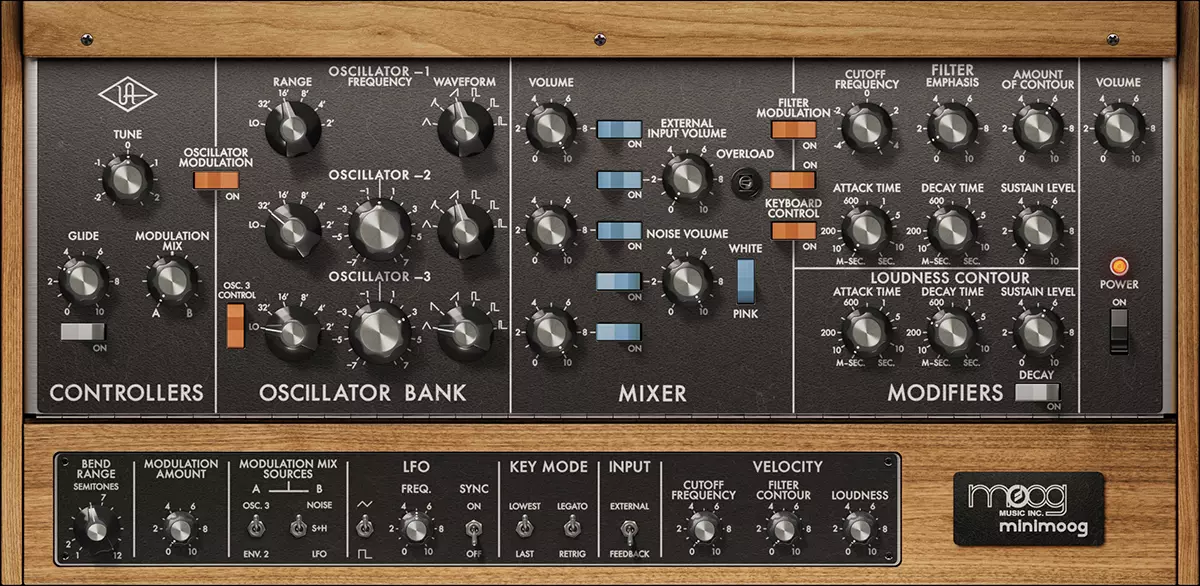
Universal Audio Moog Minimoog - Download
Modern synths can also be purchased as plugins for use in digital audio workstations. These are digital synthesizers converted into software instruments. Universal Audio's software version of the Moog MiniMoog is one example.
So Which Synthesizer Should You Buy?
Choosing a synthesizer can feel overwhelming. A good reminder is that most synths fundamentally operate the same way. Select based on your expertise and budget. Long & McQuade carries a broad catalogue of analog and digital synthesizers. You can also visit a location to test them in person.
____________________________
Omar Findlay is a Toronto-based musician and producer who has been with Long & McQuade since 2012. Well-versed in many aspects of music and recording, he displays this knowledge through his music project Planetary and other collaborations. You can find Omar on Instagram at @ohmzaudio and listen to Planetary on Bandcamp.