



How to Choose the Right Guitar Pick
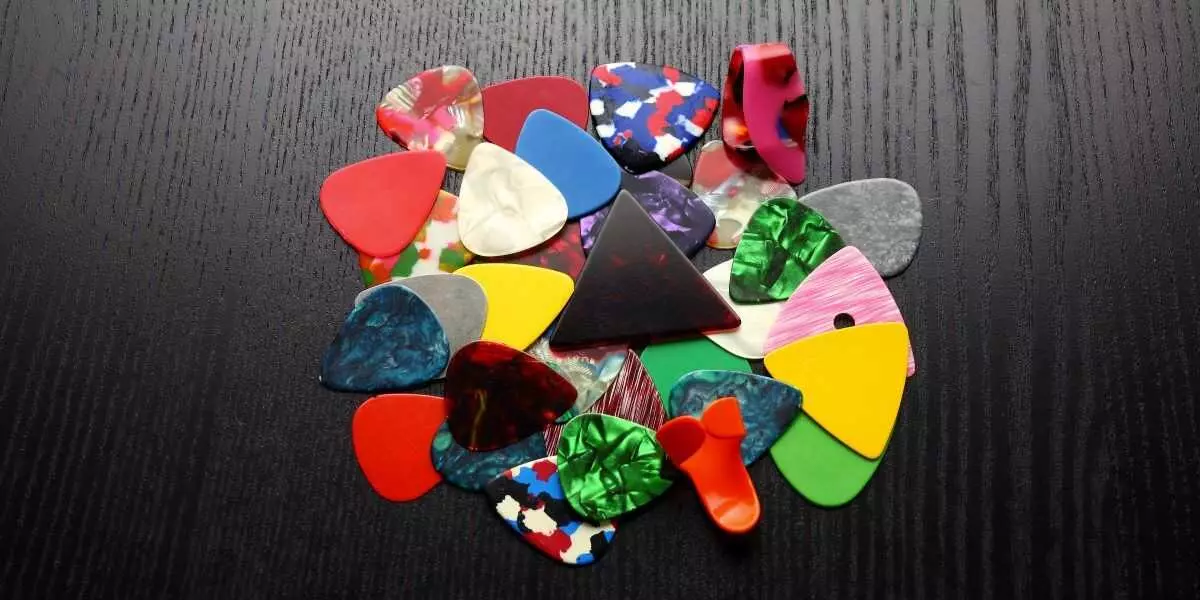
For a beginning guitarist, selecting something seemingly simple, such as a guitar pick, can feel like a matter of guesswork. For most musicians, their preferred guitar pick is chosen quite early and becomes part of their long-term identity. Choosing a pick often occurs through suggestion—you receive one as a gift, a friend has one, or a teacher uses it.
However, the guitar pick, or plectrum (as coined in the late 14th century for use with lyres), is an absolutely crucial element of guitar playing—it is generating the sound of your instrument! There are four attributes to consider when selecting a pick:
- material
- thickness
- shape
- bevel
Pick Material
For the player, the material of a guitar pick determines how harsh or mellow the pick sounds and how it feels to hold. From a manufacturing standpoint, the material dictates its durability.
Celluloid
One of the most common materials used for picks is celluloid, a nitrocellulose-based plastic blended with camphor, a resin derived from trees. Celluloid is popular for its bright tone and is suitable for strummers, providing definition to every string when playing chords. Since the early 20th century, D'Andrea USA has developed celluloid picks as an alternative to tortoiseshell, both in use and in design.
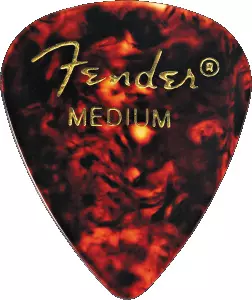
Fender Classic Celluloid Tortoise Shell Guitar Picks
Delrin (Acetal)
Over the years, many types of materials have been used for picks, including wood, stone, bone, and even wheat. However, with tortoiseshell becoming illegal for use in the early 1970s, a thermoplastic called acetal—branded as Delrin—became available.
Delrin picks have a very even response, sounding neither too harsh nor too mellow. Due to perspiration and hand size, Delrin picks are often treated or coated to reduce slipperiness and improve grip during sweaty performances.
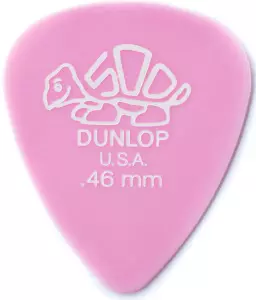
Dunlop Delrin 500 Series Players Pack in Pink
Ultem
For the player who wants a particularly “glassy” and fast-playing response, Ultem is a material to consider. Developed by General Electric in 1982, Ultem is highly durable, known for its amber-to-yellow hue and a bold tone that works well on both electric and acoustic guitars.
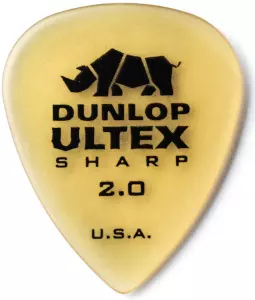
Dunlop Ultex Sharp Player Pick in Yellow
Nylon
Another very popular material is nylon, which is a particularly mellow-sounding material. Nylon picks can be made quite thin while retaining a full, natural sound, which leads us to our next attribute: thickness.
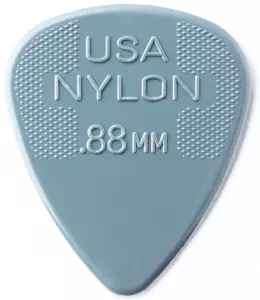
Dunlop Nylon Standard Player Pick in Gray
Pick Thickness
The thickness of a guitar pick dictates how much it will bend under pressure against the string. A pick's thickness is almost always measured in millimetres (mm), ranging from 0.38mm to 2.5mm.
Most pick manufacturers will clearly label their picks with their thicknesses, so it’s easy for a player to identify and compare them. The thickness of a pick affects two main things:
- Volume Range: Thin picks have a "capped" maximum loudness. Thin picks have a low maximum loudness; no matter how hard you strum, it will remain at its capped volume. Heavy-handed players may prefer to keep the volume consistent with a thin pick. Conversely, a thick pick (2.0 mm+) significantly increases your available volume range.
- Tone Brightness: A thick pick passes quickly over the string. A thin pick bends and spends more time in contact with the string; this friction adds higher frequencies, creating a brighter tone.
Pick Shape
The primary considerations in selecting a pick shape are comfort and technique. Small picks may be uncomfortable for larger hands, whereas large picks may feel imprecise to others.
The best guitar pick is one that is comfortable to hold and play. It is important that players pay close attention to how the picking hand feels during play; if any discomfort or stiffness arises from the pick, reconsider the playing technique or the pick itself.
The pointed end of a pick shape can make a big difference when it comes to fast picking lines and tricks like pinch harmonics. Pointed picks have a smaller end and thus allow you to hone in on a specific spot on the string, making those “squeals” much easier.
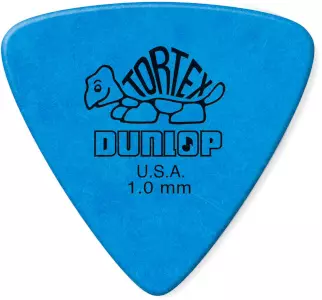
Dunlop Tortex Triangle Pick Player's Pack in Blue
Pick Bevel
A bevel refers to how curved the edge of the pick is. Most commonly seen on thicker picks, deep bevels are designed to produce a rapid, efficient glide across the string. However, more time in contact with the string creates a brighter tone and, as a result, the deeper the bevel, the brighter the sound. Conversely, a thick pick with a more traditional, non-bevelled edge will sound extremely mellow.
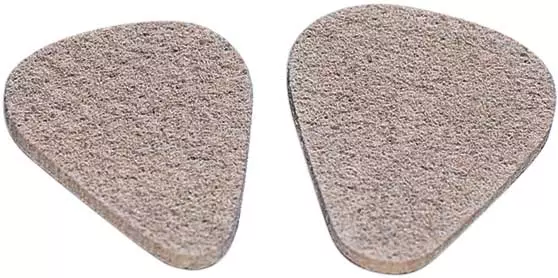
Dunlop Standard Beveled Players Pick - Felt
Finding The Perfect Pick For You
Choosing the right pick takes experimentation. Since individual picks are inexpensive, I recommend picking one variable to change at a time. For example, try several nylon picks in different thicknesses to see how the feel changes. Then, proceed to compare different materials at your preferred thickness.
At Long & McQuade, we carry every variety of plectrum imaginable to help you find your signature sound. Whether you need the classic feel of Fender Celluloid, the grip of Dunlop Delrin, the surface area of a Tortex Triangle, or the precision of an Ernie Ball Prodigy, we have you covered.
Happy pickin’!