
Buying Guide to Choosing the Right Flute

The concert flute, known for its soft tone and wide range, is one of the most popular woodwind instruments. There's a reason it's one of the most sought-after musical instruments among students in music class.
Choosing a flute may seem simple, but there are a few factors to consider before making a decision:
- Choosing the headjoint (affecting the length of the flute)
- Offset G vs Inline G (affecting ergonomics)
- Open-Hole vs Closed-Hole Keys (affecting playability & ease of use)
- Flute Materials (affecting sound and tone)
This blog will go through the four considerations to keep in mind when purchasing their first flute or when considering upgrading to an intermediate flute.
Choosing the Right Flute Size
While flutes technically come in the same length, their shape changes depending on the headjoint. Not everyone has the same anatomy, so it's important to pick a flute that is comfortable for you. For young children, the playing posture can feel awkward because the concert flute is held to the side, with the arms stretched outward to the right.
Types of Headjoints
The headjoint directly affects the overall length of the flute; choosing the right headjoint is often the most effective way to adapt the instrument’s size to the player’s anatomy.
Curved Headjoint
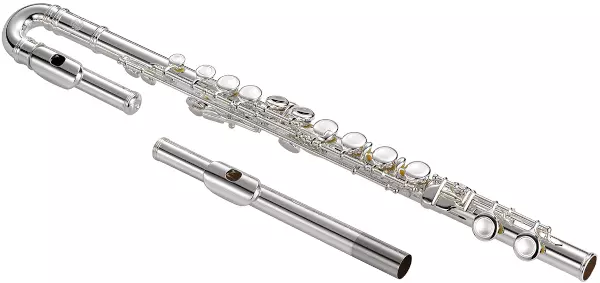
The curved headjoint is by far the most popular choice for partial-size flutes. The lip plate is positioned directly in front of the barrel, drastically shortening the instrument's overall length. This is the best option for young children and smaller players.
The Jupiter JFL700U student flute is a silver-plated flute that includes both curved and straight heads. This is perfect for beginner flutists who want to start with a smaller-framed flute and eventually learn to play a regular-size flute.
Waveline Headjoint
The WaveLine headjoint developed by Jupiter provides a few key features that improve the accessibility of the flute. It has an even taper that keeps the lip plate in line with the flute's body, preventing rotation and better response. It also helps young flutists maintain proper posture as they transition to straight headjoints.
The JFL700WD flute is a compromise between a standard-length headjoint and the traditional curved headjoint. If the standard size feels too long but the curved version feels too short, a WaveLine headjoint may be the ideal middleground solution.

Standard Headjoint
The standard headjoint is by far the most common type. The standard headjoint provides optimal, direct air flow through the flute. Most teenagers and adults transition to this type of headjoint, and is the standard head for most intermediate and professional players.
Exclusive to Long & McQuade, the CFL100 student flute by Carlton offers excellent quality and great value. The silver-plated nickel body and head joint offer the perfect combination of durability and great tone.

Offset G or Inline G Keys
When the Boehm system was invented, the Inline G mechanism was the only option available. Several years later, the Offset G mechanism was introduced.
At first, it was considered "taboo" to play with an Offset G because it was believed to “make things easier” for certain players. Nowadays, it is simply an ergonomic variation designed for players with smaller hands.
Offset G Keys
Flutes with the offset G key bring the G key closer to the fingers, reducing hand strain. The ergonomics align better with natural hand mechanics, making it better for people with smaller hands or those who priortize comfortability.
Inline G Keys
In contrast, Inline G keys place all the keys in a straight line, which is the traditional aesthetic of the flute. This makes the keys slightly more difficult to reach, which may be uncomfortable. This flute is best for players with larger hands or longer fingers, or for those who prefer a traditional, professional-style flute.
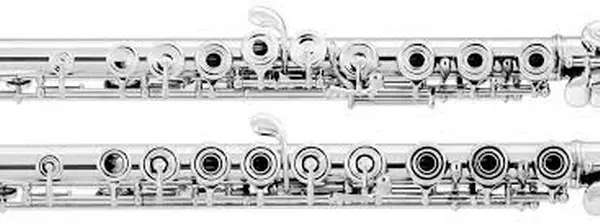
An example of the Offset G key flute above and the Inline G key flute below
Open-Hole (French) or Closed-Hole (Plateau) Keys
This is one of the most frequently asked questions regarding flutes. Why choose an open-hole flute over a closed-hole one? It depends on your playing level, how far you plan to take your flute career, and others. Here are some factors you may consider:
- Open-hole keys: They encourage proper finger placement; if a finger is not correctly positioned, the note will not sound. This also makes advanced techniques like glissandi easier to perform.
- Closed-hole keys: It is easier to play; incorrect finger placement does not affect the sound. This is a great option for beginners.
If you plan to purchase a flute and keep it throughout your musical journey, an open-hole flute is the better option. Plugs are available to temporarily close the holes and can easily be removed once you are ready.
If you are starting with a beginner instrument, a closed-hole flute is perfectly suitable. Note that closed-hole keys are rarely found on intermediate–professional models.
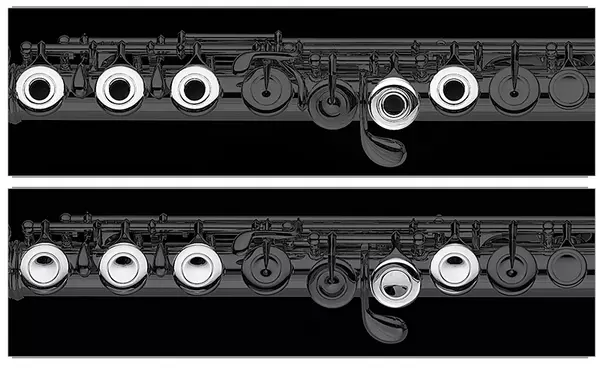
An example of the open-hole French keys above and the closed-hole Plateau keys below
Flute Material Considerations
The most commonly used materials include nickel, silver, gold (and their alloys), and wood. The material you choose will affect features such as durability, playability, sound & more. Below are the key traits of each material.
- Nickel: Nickel is tough yet light in the hands and built to last. It produces a bright, clean, shimmering metallic sound. Nickel is a great material for first-time flutists or anyone shopping on a budget.
- Silver-plated: Silver-plated flutes give a tone that’s warmer and more rounded than nickel. It typically costs a bit more but is a good recommendation for musicians moving from beginner level toward intermediate playing.
- Solid silver: Solid silver gives a warm, full, powerful, highly nuanced voice with strong projection and quick response. It is heavier than its silver-plated counterpart. Solid silver is best for intermediate and professional flutists.
- Gold (and alloys): Gold produces an exceptionally warm, deep sound. As you may expect, gold is a premium option that often starts around $15,000. Gold alloyed flutes are intended for professional musicians seeking the best tone.
- Wood: Wood creates a gentle, warm, and intimate sound that is more delicate in humid conditions. Wood flutes are an excellent option for Baroque and early repertoire.
Despite certain features that might generally make one model “better” than another, the best way to find the perfect flute is to try it. Some people have personal preferences, and it's not uncommon to hear players say they sound better on a $5,000 solid-silver flute than on a $20,000 14K gold flute.
Pro Tip for Getting a Gold Flute Sound
If you prefer the sound of gold flutes but your budget doesn’t allow for one, a common alternative is to use a gold headjoint with a silver flute body. Another option is a silver headjoint with a gold riser (the metal piece between the lip plate and the headjoint tube) or a gold lip plate. This can help achieve a sound closer to that of a full gold flute if your budget doesn't allow for it.
Try the Flute Without Buying One
If you're interested in learning to play the flute, I recommend taking flute lessons at Long & McQuade with an experienced instructor. They work with your current skill level and create a plan that teaches you the basics as well as advanced topics.
If you're interested in taking lessons or learning to play the flute but don't want to commit to buying one, there is the option of renting a flute through Long & McQuade. You can also use that rental in your lessons. If you happen to fall in love with the flute, then you can consider shopping our wide selection of flutes available.
But above all, enjoy the process! The flute is a wonderful instrument to play, offering a wide range of physical, mental, and spiritual benefits.