A Simple Guide to Choosing Drumsticks
Drumsticks are available in a wide range of types, featuring various woods, lengths, tip materials (wood or nylon), and finishes (glazed, unglazed, or grip coatings). Selecting the right drumstick for a beginner can seem challenging.
There isn’t one right answer, and there aren’t strict rules about which drumsticks to use. It usually comes down to the kind of music you play.
Finding the right drumstick is a personal process based on comfort. What works for a jazz player with smaller hands might be different from what a heavy metal drummer with bigger hands prefers. Still, both could end up liking the same stick.
This guide will discuss the key factors to consider—such as wood type, length, weight, coating, and tip style—to help you determine which drumsticks best suit your needs.
Drumstick Wood Types
Most sticks are made from maple, hickory, or oak. Less common are birch and non-wood materials. Here, we’ll focus on the three main ones: maple, hickory, and oak.
Maple
Maple is the lightest and least dense of the three. It’s great for playing fast and light. Maple also lets you use thicker sticks without making them heavy, which can be good for players with bigger hands. It feels similar to holding a larger stick.
Hickory/red hickory
Hickory is much denser and heavier than maple, and hickory sticks are usually more durable, depending on how you play.
Red hickory is a bit denser than regular hickory because it comes from wood closer to the tree’s center. Hickory offers a nice balance of weight, flexibility, and shock absorption.
Oak
Oak sticks are the densest, stiffest, and most durable of these three types. While that’s a plus, oak also sends more vibration to your hands since it doesn’t flex as much as maple or hickory.
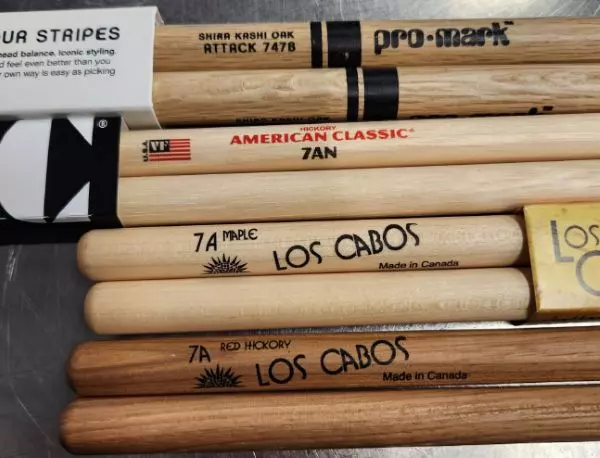
Figure 1 - Drumstick wood types
Drumstick Length
The length of a drumstick affects its balance point. If you try a stick that’s longer or shorter than what you’re used to, you’ll probably notice changes in your reach, control, and balance.
Longer sticks usually give you more reach and can feel heavier at the tip. This can help you play with more power, but they might not feel as precise.
Shorter sticks move the balance point closer to your hand, making them feel quicker and easier to control, but you’ll have less leverage.
Notice how easily you can move around the drum kit, how comfortable your grip is, and whether you like having extra reach or more control.
Drumstick Weight
The weight and type of wood (like 7A, 5A, 5B, etc.) affect how much effort it takes to play. These numbers and letters are manufacturer codes that indicate the stick's thickness and shape.
Drumsticks Sizing & Number
All drumsticks have a code consisting of a letter and a number. Historically, these indicated the style of music it was intended to play, but now they are mainly used as labels to determine sizing.
In general, a lower number means the stick is thicker and heavier (like 2B), while a higher number means it’s thinner and lighter (like 7A).
- A - stands for “orchestra”, used in orchestras.
- B - stands for “band”, used in concert bands.
- S - stands for “street”, used in marching bands.
- D - stands for “dance”, used in dance bands.
A lighter stick is easy to move, but it takes more work to keep it going. A heavier stick takes more effort to start, but it keeps its momentum better.
If you are just starting out, don’t worry—you can begin with a simple, popular pick like a 5A drumstick, which works well for most beginners.
Drumstick Coating/Finish
When it comes to finish, think about whether your hands sweat while you play. Most sticks have a lacquer coating. Glazed and rubber coatings can help you grip better if your hands get sweaty.
You might find that a stick with a natural finish helps absorb sweat without making you lose your grip. Other options for a better grip include stick wax and gloves, so you can try those too.
From my own experience, rubber grips have sometimes caused blisters. If you want to try a new stick finish, it’s best not to use them for the first time during a long show unless you have a backup plan.
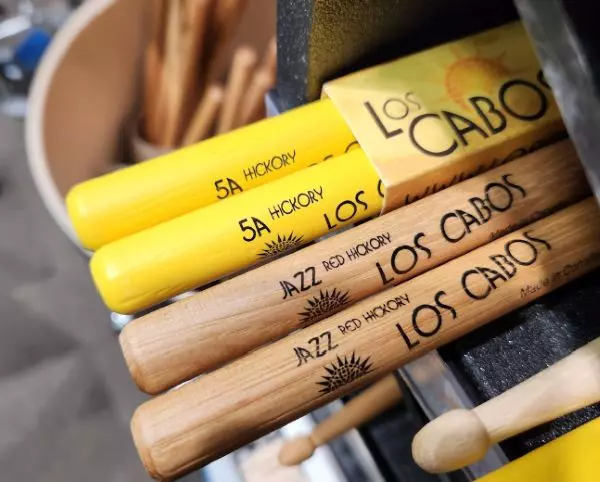
Figure 2 - Rubber coating vs lacquer finish
Drumstick Tip
Should you choose wood or nylon tips? For some drummers, it doesn’t make a big difference.
Nylon tips give you clearer sound on cymbals and cymbal bells, which can matter if you want those subtle differences in your music.
As for tip shape, it’s often hard to tell the difference between a ball-shaped tip and an acorn tip, but there are lots of options to try.
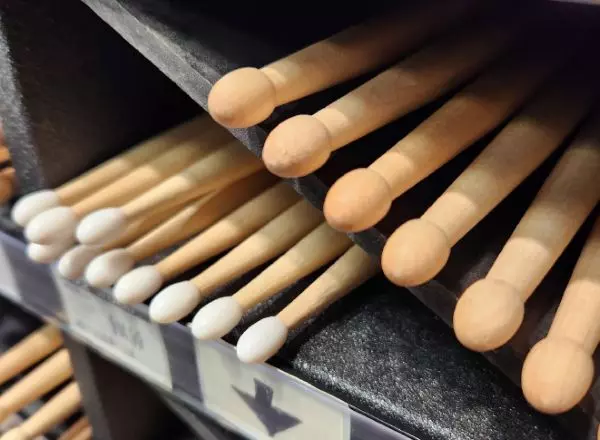
Figure 3 - Nylon vs Wood Tip
Drumstick Alternatives
Remember, you don’t have to stick to drumsticks if you want different sounds from your drum kit. You can also use brushes, multirods, and mallets, among others.
If you want a quieter sound, brushes and multirods are great. For dramatic cymbal swells, try mallets. There are lots of options to explore in your playing and recording. There are no rules, so feel free to experiment!
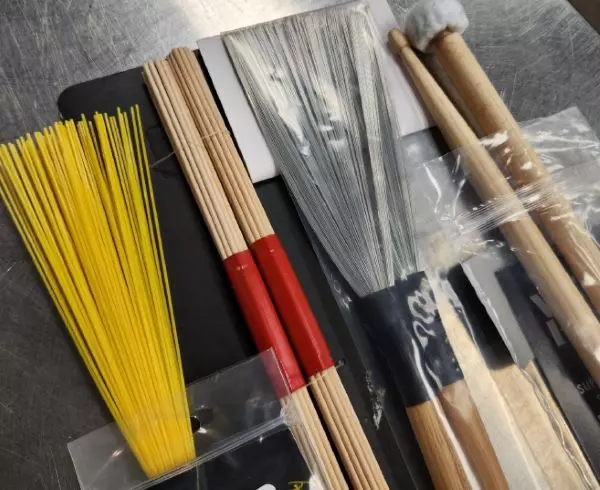
Figure 4 - Brushes, Mallets, and Multirods
Shop Around For Drumsticks
Long & McQuade offers a wide range of drumsticks. If you already know what you want, you can shop online. But if you’d like to try them out and see what feels best, visit your local Long & McQuade and test them in the demo room.
Trying Drumsticks In-Store
When you visit, try a few simple things to get the most out of your trip: hold each stick to see if it feels natural, tap it on a pad or surface to check the balance, and notice how comfortable it is in your hand.
Test out a few different types and see how easily you can move and control each one. If you’re new to drumming, don’t be shy about asking the staff for advice or recommendations.
When picking drumsticks, focus on what feels comfortable and matches your playing style. It’s a personal journey with no strict rules. Use this guide as a starting point, and trust your own preferences as you try different sticks to find what works best for you!
FAQs
What is the best drumstick for beginners?
Most beginners find 5A drumsticks to be a comfortable, all-purpose size. They offer the best balance of weight, thickness, and length and work well with most music styles and hand sizes.
How much do drumsticks cost?
A pair of drumsticks is pretty affordable, starting at $10. More standard models are available for around $20, while signature models or multi-packs range from around $60+. Unique mallets, brushes and multi-roads for specialty instruments vary in price.
What is the best wood type for beginner drummers?
Hickory is a great starting wood type. It’s durable, balanced, and absorbs shocks well, making it forgiving for new drum players.
Should I get sticks with a grip or special coating?
If your hands sweat or you have trouble gripping the stick, consider sticks with special coatings or use stick wax. Otherwise, standard lacquered sticks work for most people.
Do I need different sticks for different music styles?
Not necessarily, but some players prefer lighter sticks for jazz and heavier ones for rock. As you gain experience, you might choose different sticks for different situations.