Guide to Understanding Orchestral Strings
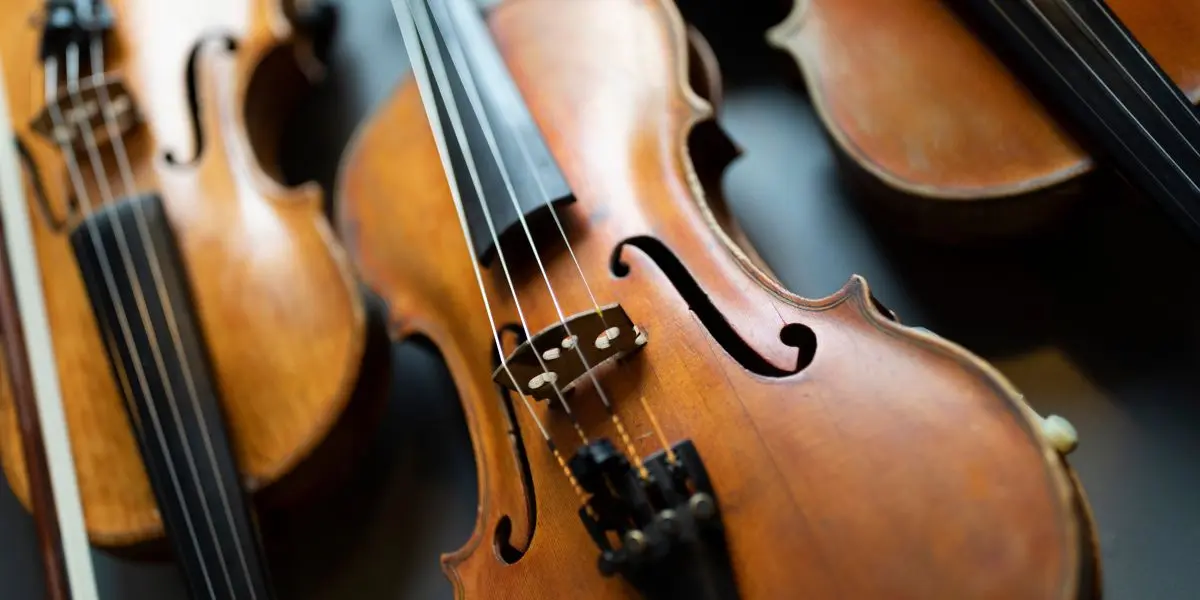
The type of strings you choose for your string instrument can drastically change the sound it produces. This article provides information on orchestral strings and maintenance to assist you in selecting the best string type for your orchestral instrument.
4 Main String Instruments in an Orchestra
The four primary orchestral string instruments forming a modern symphony orchestra are the violin, viola, cello, and double bass. These wooden, stringed instruments vary in size, with smaller instruments producing higher pitches and larger instruments producing lower pitches.
Violin
The violin is the smallest and highest-pitched instrument in the orchestra, celebrated for its bright, clear sound that can be heard clearly across the ensemble. It frequently carries melodies and solos. Violin strings come in various materials and tensions, which influence tuning and responsiveness.
Viola
The viola, slightly bigger than the violin, offers a deeper, warmer tone and usually plays the middle harmonies in an orchestra. Its thicker strings are designed to produce a darker sound, making the selection of strings crucial for good projection and clarity.
Cello
The cello produces a rich, resonant tenor-to-bass range and is played seated with the instrument supported by an endpin. It frequently carries lyrical melodies and powerful bass lines. One should choose cello strings that balance projection and quick response.
Double Bass
The double bass is the largest and lowest-pitched member of the string family, providing the foundation of the orchestra’s rhythm and harmony. Because of its size and low register, double bass strings need to be stable, durable, and focused on the low end.
Types of Core Material
Gut Core
-
These are the traditional core materials created centuries ago. Made from sheep intestines, they are more flexible, tend to have a slower response, and require more action from the bow. They offer the most complex tonal complexity and overtones, but are highly sensitive to changes in humidity and temperature.

Steel Core
-
These strings are made of a solid or stranded steel core. Generally, steel strings have a quick response and a focused, brilliant tone but have less tonal complexity. They are extremely durable and offer great tuning stability.
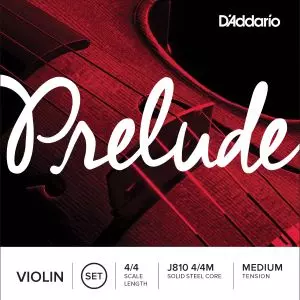
D’addario Prelude Violin Medium Tension String Set
Synthetic Core
-
Synthetic core strings offer the best of both worlds. Made from synthetic materials, they offer the warm, complex tone of traditional gut strings while maintaining the tuning stability and durability modern players require.
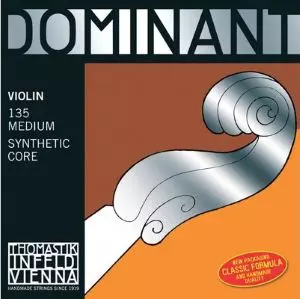
Thomastik-Infeld Dominant Violin Set with Aluminum Wound ‘E’
Types of Outer Wound Material
Orchestral string instruments use diverse winding materials to create greater tonal richness and added complexity. Players commonly mix and match materials for each string because each material has different characteristics. Winding materials influence not just tone, but also how the string responds to bowing and finger pressure.
There are different types of wound options, including:
- Nickel – Bright, balanced, corrosion-resistant.
- Silver – Warm and mellow, smooth feel, often used on lower strings.
- Tungsten – Dense material, great response for low end.
- Chrome – Durable and smooth, good for longevity and consistent tone.
- Gold – Warm, brilliant & responsive; short break-in time
- Aluminum - lightweight and bright, great bow response, often used for higher strings.
String Tension
String tension refers to the amount of stretching force in the string. The lower the tension, the less the string is pulled, and the higher the tension, the more it is pulled.
Light Tension
-
Requires less bow weight and finger strength. Has a warm sound but sacrifices a bit of projection.
Medium Tension
-
Balanced feel and response, the most popular choice among musicians. Offers projection without extra demand from the bow or fingers.
Heavy Tension
-
Offers the most projection, but requires more strength from the fingers and weight in the bow.
String Facts & Recommendations
Steel Strings
-
Steel strings are often used in country, folk, and bluegrass music because they produce a clear, focused sound.
-
Electric violins are commonly strung with steel core strings. Additionally, they are commonly used among beginners and school orchestras for their durability.
-
They are also a common choice by violists and cellists.
Synthetic Strings
-
Synthetic strings are commonly used in classical music.
-
Synthetic strings are popular in more intermediate/advanced orchestral settings, as their sound blends well in an ensemble.
Gut Strings
-
Gut strings are favoured by early classical and baroque-style players.
-
Gut strings are preferred for their ability to stay true to tradition and their authentic sound.
Choosing Strings for Beginner Players
Beginner players may benefit from choosing more than just a basic string, as long as they can keep up with the maintenance and costs. For example, choosing synthetic strings over steel strings can be a great choice for newer players, helping them produce a fuller, warmer sound.
Choosing Strings for Advanced Players
Intermediate and advanced musicians will benefit from choosing a string with more complex tonal properties to diversify their sound profile. Especially if you are doing a fair amount of solo performances, this will help to give your sound its own character. Choosing a variety of outer wound materials is a good place to start when experimenting with your sound.
String Maintenance
-
Clean your strings with a cloth after each playing session.
-
Store your instrument in a case. Maintain humidity levels between 45-55% using a humidifier and a hygrometer (a tool that measures humidity).
-
Avoid unnecessary contact with the strings to minimize corrosion.
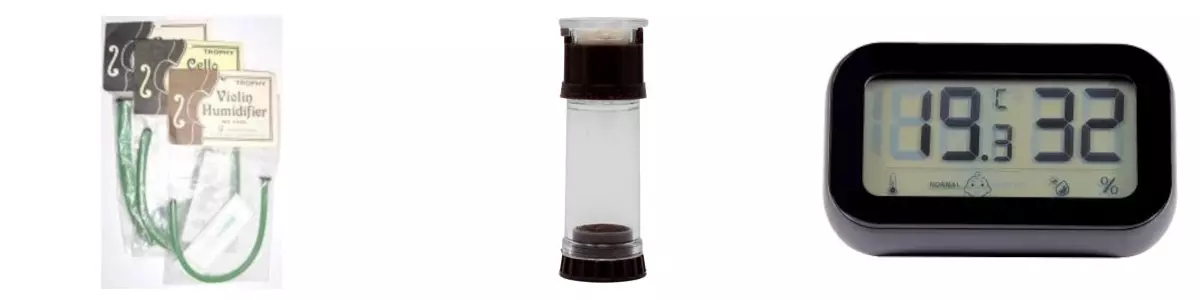
| Trophy Violin Humidifier | Humistat Case Humidifier | Denver Hygrometer |
When Should You Replace Your Strings?
If you are playing regularly, a good rule of thumb is to change your strings every 6-12 months. More consistent players may change their strings every 3-6 months. Otherwise, strings should be changed if you notice a loss of clarity and projection, dead notes, visible wear or fraying, or difficulty staying in tune.
Experiment With Different Strings!
Each instrument will have its own needs and acoustic characteristics that interact differently with various strings. Instrument age and construction, as well as your bridge and sound post setup, will also play a factor in the sound the strings produce.
Please keep in mind that this is only a guide. You may need to experiment with a mixture of string brands and types to find the combination that works best for you and your instrument.