

Ohm Improvement: Get a Great Tube Tone Quietly at Home
Last Updated: December 3, 2025
Tube amplifiers. They’re warm, they’re often heavy, and they’re loud. All of this said, guitarists can’t seem to get enough of them, and the history is there to prove that.
Nashville session ace Tom Bukovac says, “Good tone is heavy and hard to carry.”
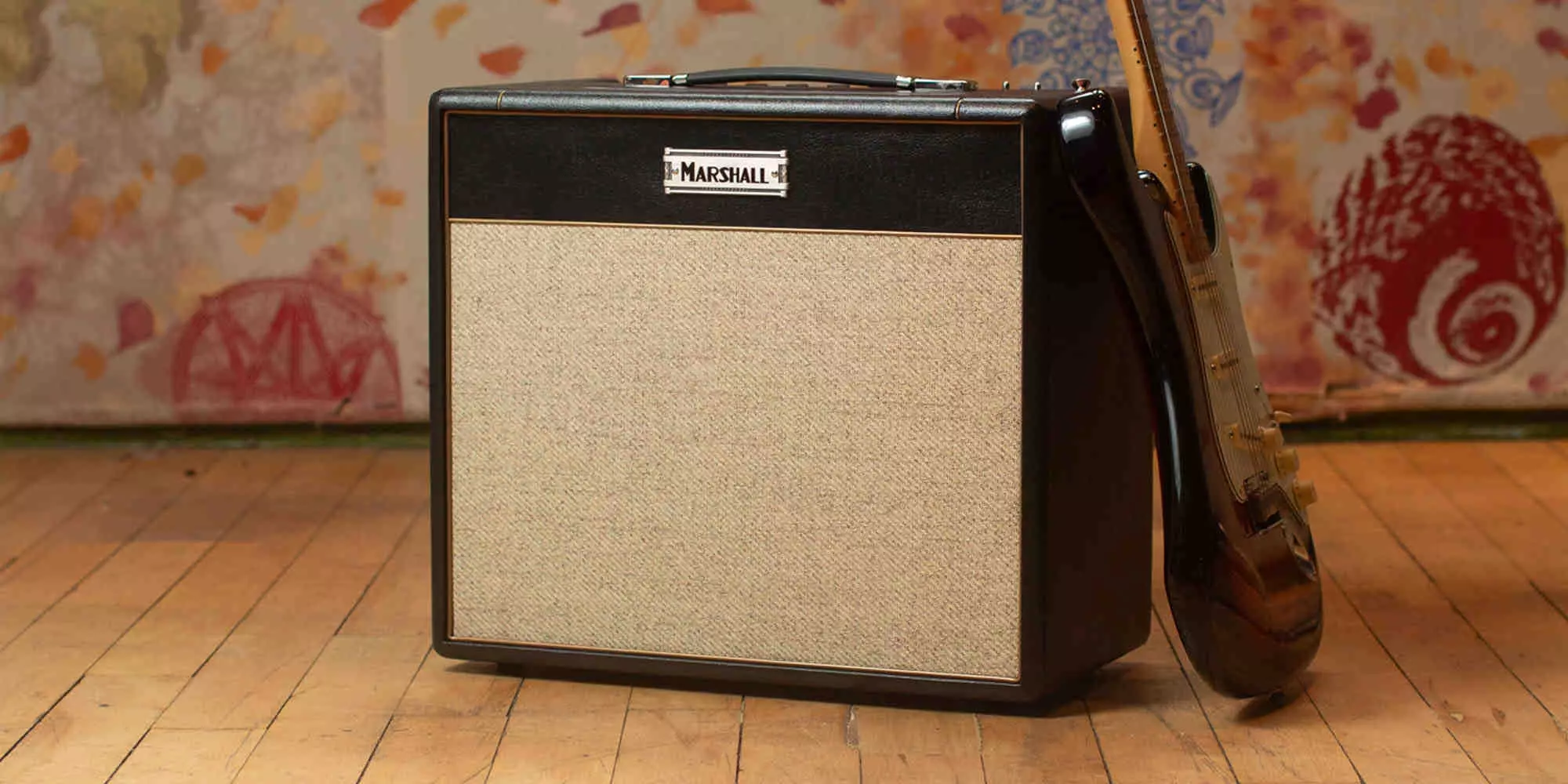
Regardless of whether or not you agree with him, it is undeniable that there are many players out there who are proud to lug a Marshall half-stack on stage like a badge of honour.
The Gig, The Tone, The Reality
After this type of glorious rocker lights up their amp and basks in tone all night, the club closes, the gig is done, and it’s time to take the beloved tube amp home.
It’s at this point in the process that the Marshall is set aside in the closet, only to see the heat of battle again when the opportunity to shake the walls at a club presents itself once more.
If this scenario sounds familiar, you’re in for a treat – it’s time to get the Marshall out of the closet, turn it on, and get a great tone at a whisper.
The Modern State of Guitar Tone
It is an understatement to say that there are more options than ever when it comes to getting high-quality electric guitar sounds at home quietly.
Although companies such as Line 6, Hughes and Kettner, BOSS, Headrush, Fender, Kemper, and Neural DSP have introduced a multitude of professional-grade digital amp modelling and profiling technologies to the market, the good news is that tube amp technologies are advancing as well.
It’s never been easier to get a great tube tone quietly.
Let’s lean into three terms that you might have heard: attenuator, load box, and impulse response.
Attenuators
In plain terms, attenuators are devices that reduce the power an amplifier sends to a speaker.
Typically, attenuators use a type of circuit called an “L pad” that is designed to absorb a portion of the amplifier’s power and send the rest to the speaker based on how you adjust it.
They are pretty simple in that they are usually a box with one or two knobs, and they are designed to be placed between the speaker output and the speaker using conventional ¼” speaker cables.
Attenuators are great for players who like the overdriven, saturated, and power-tube-distorted sound of their amplifier at 10, recorded traditionally with a microphone, while reducing the volume of “10.”
A prime example of an attenuator is the Dr. Z Brake-Lite, which has only one knob to control the desired volume reduction.
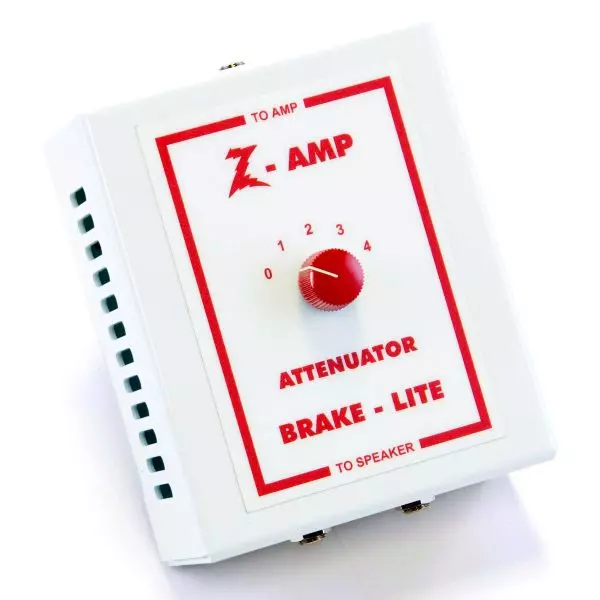
Since the first commercial guitar amplifier attenuator became available in the ‘70s, the term “attenuator” has become somewhat popular and notorious in guitar communities, so much so that it is often used to describe products that are not necessarily attenuators.
Designed to behave similarly to attenuators, many modern tube amplifiers include a feature called power scaling, which allows the wattage to be adjusted.
This type of circuit operates differently from an attenuator but provides a similar experience.
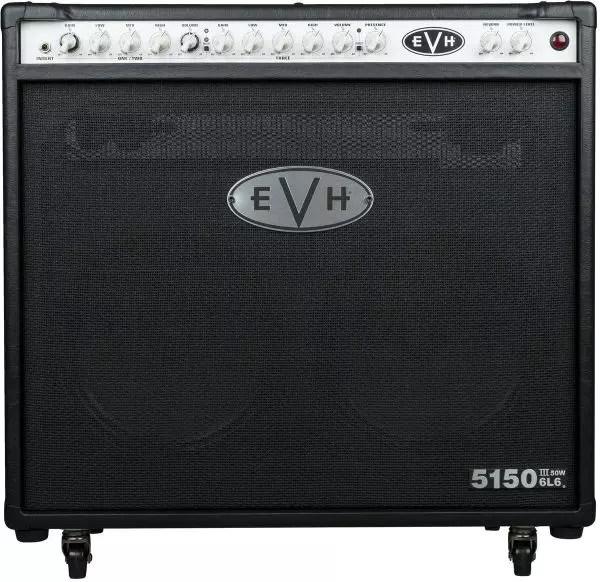
The EVH 5150III combo is an example of this, with the ability to scale the amplifier's output power from 1 watt to 50 watts.
All things considered, using attenuation still results in some sound in the room.
If you’d like to go completely silent, except for some sound in headphones, it’s time to get introduced to a load box.
Load Boxes
In contrast to attenuators, load boxes are designed to properly handle the entirety of the output power of the amplifier by way of matching the amplifier’s expected impedance of the speaker.
In a sense, load boxes “trick” amplifiers into thinking they are hitting an adequately matched speaker, thus eliminating the need for a cabinet.
If a guitarist has used an amplifier head connected to a speaker cabinet, then matching the impedance (measured in ohms) works the same way.
It is imperative that an amplifier is matched to the proper load of a speaker, or it can damage the amplifier itself.
Once the amplifier is properly connected to the load box via a speaker cable, the load box can output a direct line-level signal that an audio interface or other devices can capture.
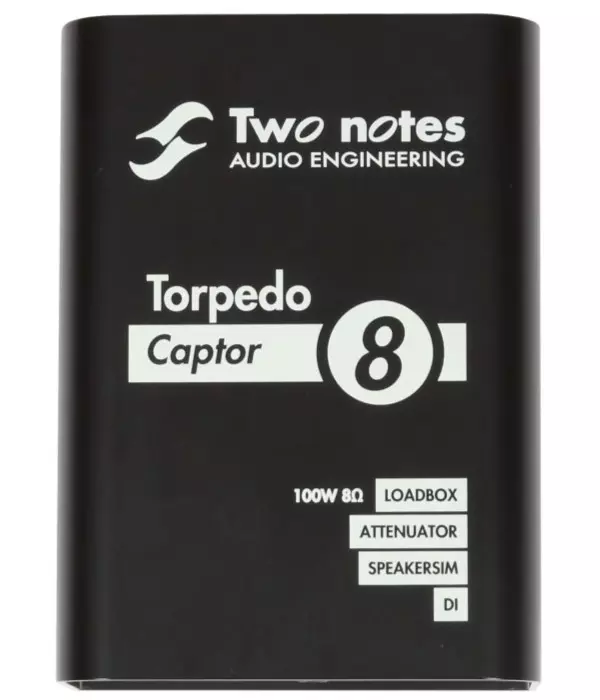
An example of a simple load box is the Two Notes Torpedo Captor series, which comes in 4, 8, and 16 ohm versions.
Some load boxes, including the Torpedo Captor series units, also include a “through” output for connecting the amplifier to a speaker cabinet, while capturing the direct line-level signal.
Some amplifiers have taken the spirit of the load box and streamlined the process one step further by incorporating a direct signal option into the unit's design.
Hughes and Kettner is known for this with their TubeMeister Deluxe 20.
For example, an amp that can be switched to zero watts with a built-in XLR direct out for completely silent recording.
EVH has recently joined the party as well by introducing the Iconic series of amplifiers, which includes a “power amp mute” and a speaker-emulated XLR line output for silent recording.
So the amplifier is connected to the load box, there is no speaker connected, and nothing has been damaged.
It is connected to an audio interface, and the track is armed in a recording session.
Listening to the first few notes played, the tone is quite fizzy and not very satisfying.
What happened here? Well, there is no speaker!
To complete the tone, one needs to add the sound of a speaker to the dry direct signal. Enter the impulse response.
Impulse Responses
In essence, impulse responses (often shortened to “IRs”) are a modern way to capture the sound of a mic’d speaker cabinet in a particular type of room.
Without getting too technical, impulse responses are created by sending a brief and replaceable output signal (the impulse) into a speaker cabinet captured by a particular microphone, recording this response with the ability to sample later using any core “impulse” – in this example, the direct signal of an amplifier from a load box.
In a recording session, IRs often manifest themselves as a plug-in on a track, essentially adding a tiny sampled reverb to your existing sound – including the tonal contours of the speaker and the microphone.
Some companies, such as Two Notes, offer impulse response loader plug-ins like Wall of Sound, which, as an example, is extremely sophisticated enough that you can quite literally drag around multiple types of microphones on and around the speaker to find the “sweet spot”.
As you can imagine, IRs have made a big splash in the home recording market and continue to rise in popularity.
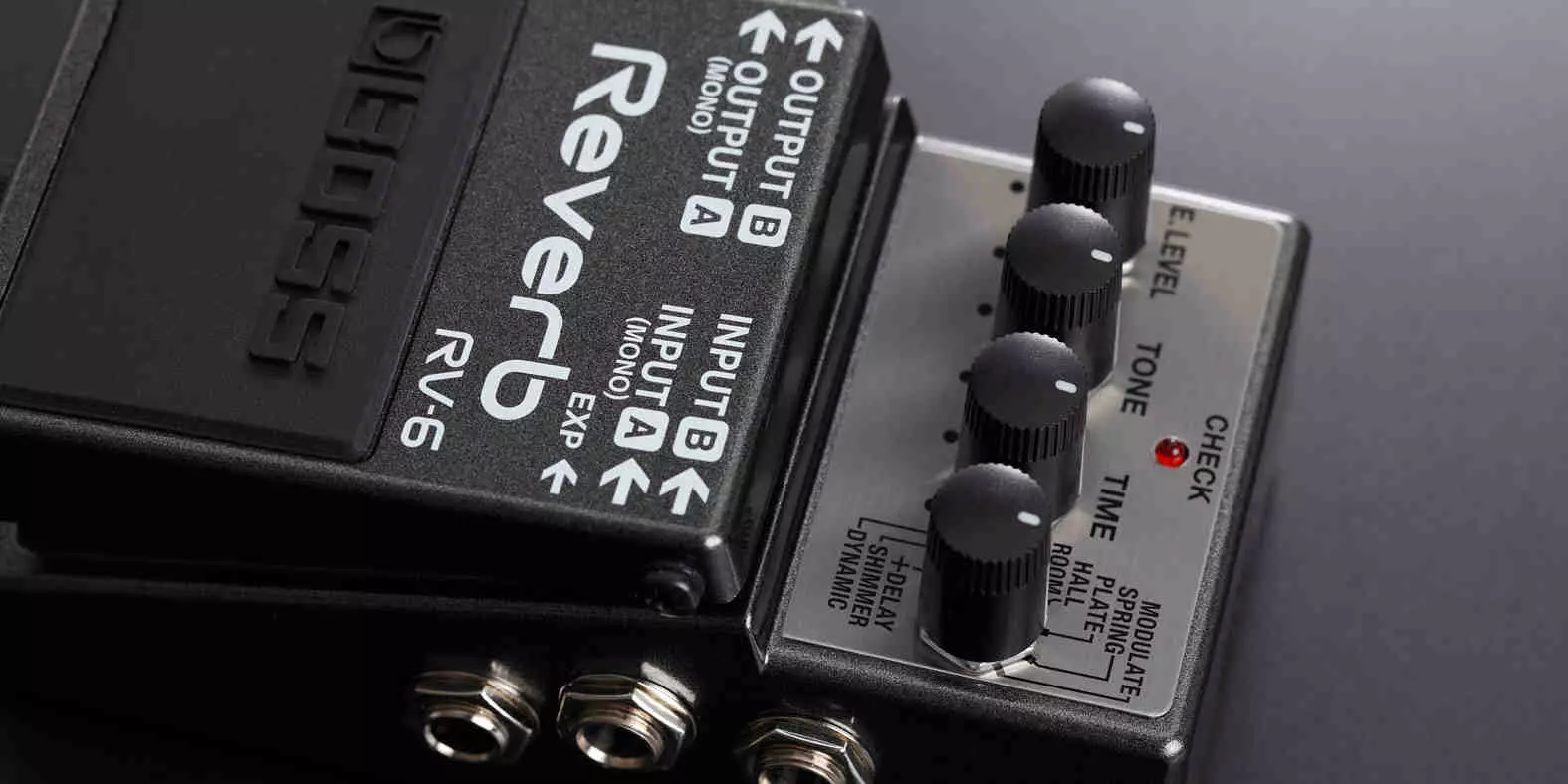
BOSS has recently added the IR-200 to its 200 series of pedals.
Strymon has also implemented IR technology in its critically acclaimed Iridium pedal.
Even Celestion, the iconic guitar loudspeaker company founded in 1924, has stepped up to the plate and is offering IRs for many of its reputable loudspeaker models, some of which are available on the aforementioned BOSS IR-200.
Although using impulse responses as a plug-in on a track in a recording session is an inexpensive and quick method to enjoy the potential of one’s favourite tube amplifier, there are now many options that do not require a computer.
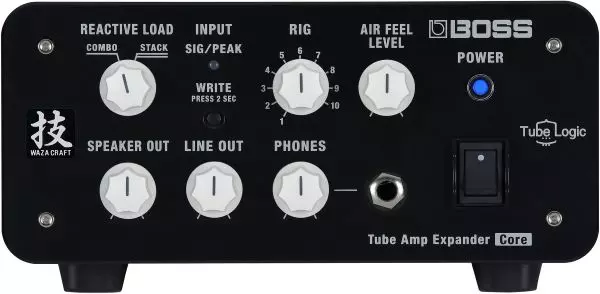
BOSS and Two Notes have developed elegant solutions in the Waza Tube Amp Expander and the Captor X.
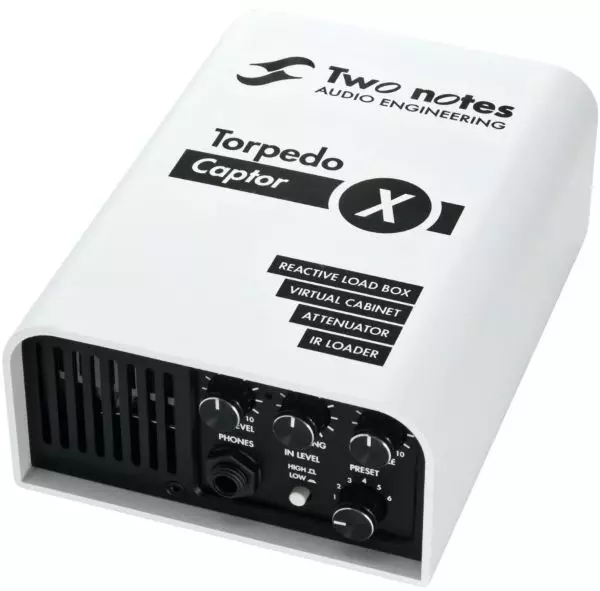
Also, while it does not use impulse responses – rather, its own unique form of speaker and room emulation – the Universal Audio OX is a wonderful solution.
Most self-contained load boxes and impulse response products also include the previously mentioned “through” output, so a guitarist can still connect to a real speaker cabinet.
Also, to throw back to a time called four paragraphs up, many of these devices include an attenuator on these “through” outputs!
The Golden Era of Tube Tone at Home
Between attenuators, load boxes, and impulse responses, we are living in a great era of tube amplifier technology.
Capturing the wonderful sound of those warm, often heavy, and loud tube amplifiers has never been easier.
So get the Marshall out of the closet, find the home performance solution that works best for you, and enjoy remaining in gold status with the neighbours!
About the Author
As an avid guitar and home recording enthusiast who started with Long & McQuade in 2016, Pat's goal every day since has been to help music creators find the right tools to fulfil their visions.
You can hear Pat's latest instrumental guitar release, titled Voyages, on Bandcamp. Pat is the assistant manager of the Halifax, NS location.