
Choosing Your First Electric Guitar
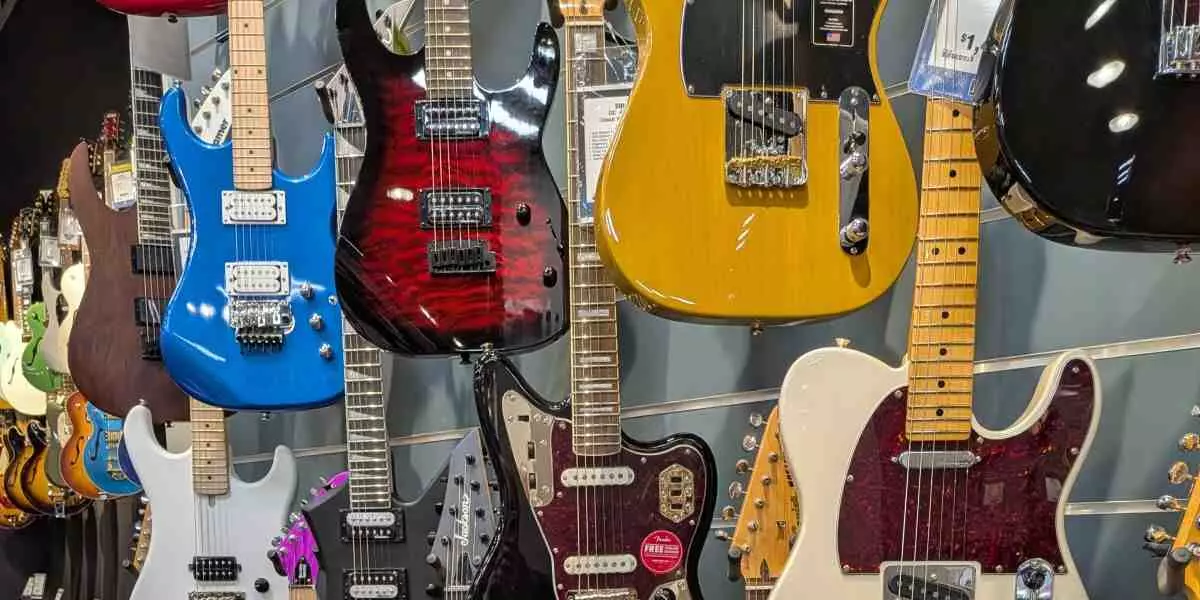
So, you're shopping for your first electric guitar. How exciting! But also...how overwhelming! There are a lot of choices. What's the right one?
Let's start by taking a breath. There is no wrong answer. Any new electric guitar can be set up to play well, and all new electric guitars sold by Long & McQuade come with a free setup. So any guitar that is in your price range, any guitar that inspires you (even if it's on a purely visual level), can be a perfectly valid choice.
You can play any kind of music on any kind of electric guitar. (Take it from the guy who recorded a traditional jazz album mostly on a Floyd Rose-equipped Charvel guitar designed for glam metal.) That said, certain types of guitars lend themselves to certain types of music.
Matching Guitar to Music Style
If your goal is to play screaming, sustaining hard rock leads, you probably will want a guitar with humbucker pickups, whose greater electrical output will push your amp harder and facilitate the kind of distortion that such music requires.
On the other hand, if your goal is to play crisp "chicken pickin'" country licks or super-clean R&B rhythm, a guitar with single-coil pickups may be what you need to get the sound you want.
That said, certain types of guitars lend themselves to certain types of music. Some of the things you should consider when buying your first electric guitar are ergonomics, features and price. Let’s break these down in more detail.
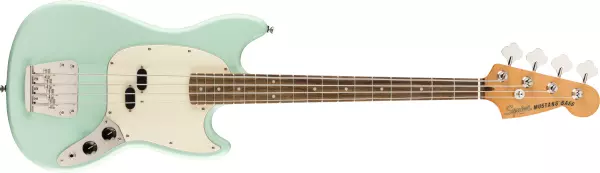
A short-scale instrument like this Squier Classic Vibe '60s Mustang can be an ideal choice for younger or smaller players. But many larger players enjoy them too!
Ergonomics of an Electric Guitar
In guitar terms, ergonomics is simply the matter of how a guitar's body feels against your body, and how a guitar's neck and fingerboard feel in your hands. A sure way to guarantee that a guitar will sit in the corner unplayed is if it doesn't feel good to play.
When considering a guitar's ergonomics, it is important to look at the body shape and feel, the scale length and playability, and the right fit.
Body Shape & Feel
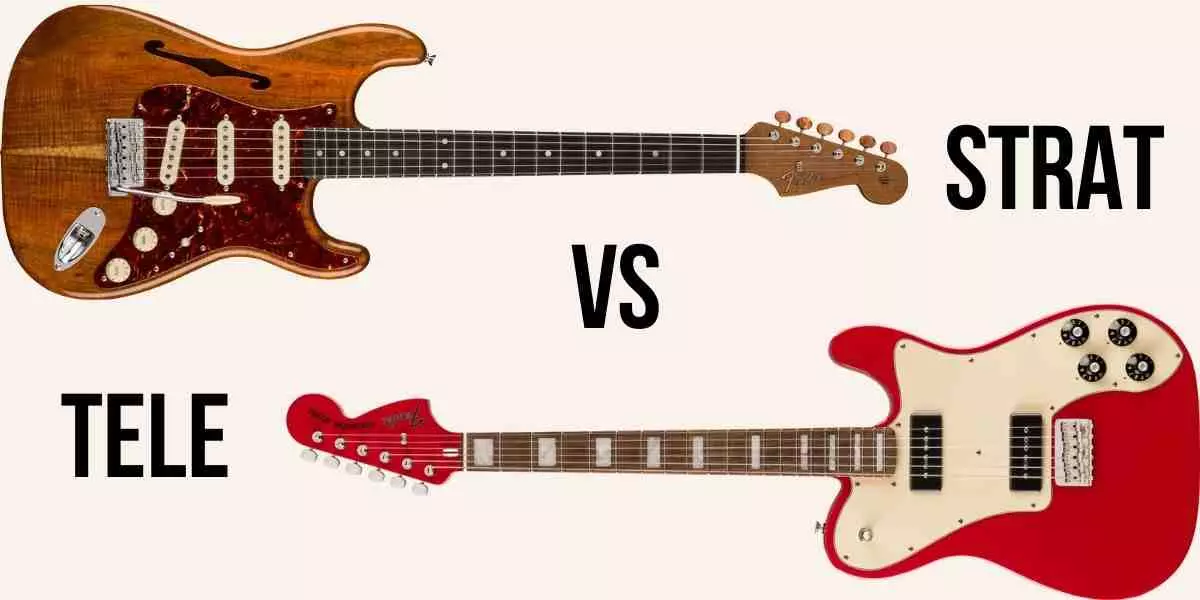
Different models have a fundamentally different feel. For example, the Fender Stratocaster, the most popular electric guitar shape in the world, comes in slight variations across different brands. Examples include the PRS Silver Sky, the Kramer Focus, and the Ibanez AZ, which have a particular way of resting against the body and a particular placement of the frets.
The Gibson Les Paul, sometimes genericized as a "singlecut" shape, has a characteristic weight and way of sitting on the knee when played seated. As the old commercial used to go, "Those who like it, like it a lot."
I tend to find that Les Pauls roll right off my right thigh when I let go of them, due to their sometimes extreme weight. You really have to hold a guitar against you to know what you think of it. Everybody's type is different; different guitars will feel more comfortable for some than for others.
Scale Length & Playability
A frequently overlooked factor in a guitar's ergonomics is scale length. This is the distance from the bridge to the nut.
A Stratocaster or Telecaster has a 25.5" scale length. Les Pauls and SGs have a shorter 24.75" scale length. This means that the same string tuned to the same pitch on a Les Paul will feel slightly slacker than on a Strat.
Consequently, Strats and Teles tend to come from the factory with 9-gauge strings, while Les Pauls and SGs usually come with 10s.
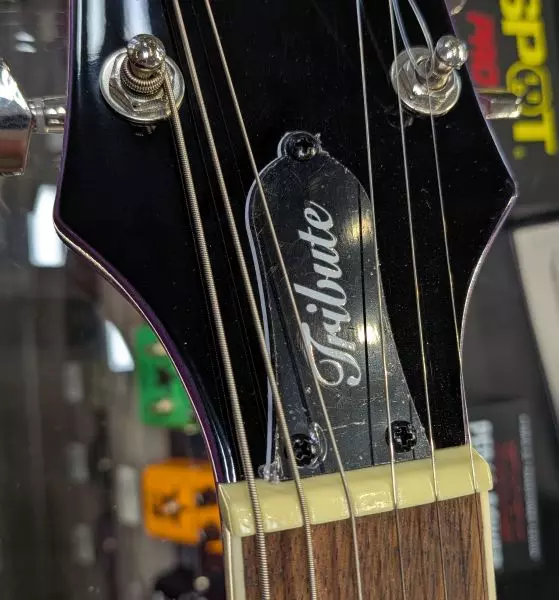
The nut and E-string tuners of an Epiphone SG Tribute guitar. The nut is the off-white, wedge-shaped bar near the bottom of the photo that marks the end of the playing area. The strings ride over the nut toward the tuners.
Finding the Right Fit
Because of where the necks are mounted on Strats and Les Pauls, the neck of the former won't necessarily feel longer than that of the latter. But scale length can increase the perceived neck length.
For example, on a Fender Jazzmaster, the "offset" body throws the neck slightly further out, meaning the neck can feel longer because the first position (the "cowboy chord" zone) is physically further away from the center of your body. The Jazzmaster also has a physically larger body than a Strat or Telecaster.
If you have a larger torso or longer arms (or long fingers, or all of the above!), it may be more comfortable than the small, but thick, Les Paul.
There are also more subtle variations on the basic shapes: Jackson and Charvel market the "Dinky," a slightly shrunken-down Stratocaster shape, while the Kramer Beretta takes the basic outline of a Strat and adds a slight offset. There's also the Jackson Surfcaster, a shrunken-down Jazzmaster that has the same longer scale length as its larger cousin but a neck-mount position that makes the neck feel shorter.
For those with stubby fingers, consider trying a Jaguar, which has a large Jazzmaster body coupled with a short 24" scale length. The short scale makes longer stretches easier. The short scale also means that heavier strings feel much slinkier than on a Les Paul or Strat. I string my Jaguar up with 12s.
Maybe you're a player with a smaller torso, shorter arms, or smaller hands. Consider a Mustang -- which combines the shorter scale length of the Jaguar (24") with a smaller body, even smaller than a Strat!
Many brands also market "mini" and "junior" versions of their normal shapes, such as the Squier Affinity Stratocaster Junior and the even smaller Mini Strat for growing players. Careful about the Les Paul Junior though -- a historic model that's "Junior" in name only!
With all of these shapes, you can find options in virtually every price range. The best thing to do is to try a range of options and see what feels good to you! If your instrument feels good, inspiration will flow.
Features on an Electric Guitar
Pickups
As we've already discussed, the choice between a guitar equipped with humbucker pickups and one equipped with single-coil pickups is one of the key decisions to make when choosing an electric guitar.
Single-coil pickups were the original pickup design, and they still are prized for their clarity and brightness. Their main drawbacks are twofold: first, they don't push your amplifier as hard, so they won't get you into a thick, sustaining distorted sound as easily. (This may not actually be a drawback at all, if you're seeking a clean, treble-forward sound!) The other drawback is that they can be noisy, particularly the so-called "P-90" pickups found in certain Les Pauls and instruments like the J Mascis Jazzmaster.
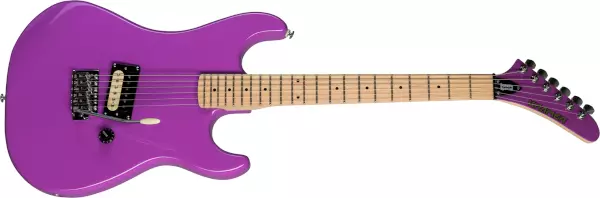
A Kramer Beretta Special, a popular rock-oriented starter guitar. Note the humbucker pickup.
Single-coil pickups pick up not just the sound of your strings' vibration, but also varying levels of 60 Hz mains hum. This can cause a slightly flat B note to come through your amp, depending on how clean the wiring is where you're playing. Single-coil pickups can be found on most Fender and Squier guitars, as well as other guitars closely based on those designs.
Humbucker pickups take the simple electromagnet of the single-coil and double it, with two coils wound in reverse and with reversed magnetic polarity. The immediate and originally intended effect is a reduction in the 60 Hz hum. But the unintended effect, which has made them a standard feature on guitars meant for "heavy" music, is that the extra copper windings produce a much stronger electrical signal, driving amps into distortion more readily.
The main drawback of a humbucker pickup, particularly on lower-cost versions, is (or can be) a considerable loss of treble signal and clarity. You will find humbuckers on most Les Pauls, SGs, and other guitars purpose-built for rock applications.
Ironically, humbuckers are also standard equipment on most of the semi-hollow and hollow-body guitars favoured by jazz guitarists, simply because of the noise reduction they offer.
Trem vs. hardtail
The presence or absence of a vibrato or "tremolo" unit is another factor to consider. A vibrato or "trem" allows you to bend multiple strings, either down or up, with the push or pull of a bar that extends parallel to the strings from the bridge or tailpiece.
P.S. The use of the word "tremolo" is a historical mistake that has just stuck. Most companies, other than Fender, use the terms "vibrato" or "vibrola" to refer to this type of device. The generic terms "whammy bar" or "wiggle stick" are universal!
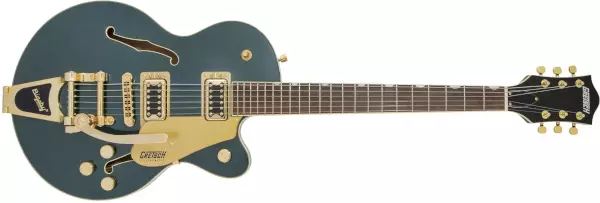
The Bigsby vibrato unit on a hollow-body Gretsch guitar.
These devices add expressive possibilities, and certain types of music will require them. For example, if you want to play like Kevin Shields from My Bloody Valentine, a vibrato of the sort that can be found on most Fender-type guitars that are not Telecasters. However, they can complicate the day-to-day process of keeping your instrument in tune and playable.
Jazzmaster and Jaguar vibratos, for example, are very easy to change strings on, but they can present tuning and setup challenges to beginners, particularly with light-gauge strings. The Bigsby vibrato units found on many hollow-body and semi-hollow instruments are fairly tuning-stable, but they are notoriously difficult to string up without a third hand!
Locking tremolos, either by Floyd Rose or Ibanez, are a common feature of metal-oriented guitars, and they have great expressive value to the musician who knows how to use them. They are also useful for keeping a guitar in tune. However, they can greatly complicate string changes, alternate tunings, and setups, and are meant for more experienced electric guitarists.
Once a Floyd Rose system is locked at the nut, the tuning pegs no longer function in the normal way, and tuning variations with only limited travel can be accomplished with the violin-style fine tuners at the bridge.
Strat "trems," found on most Stratocaster-shaped guitars by a range of manufacturers, are a fairly safe choice, since they can accommodate a wide range of different setups, including being immobilized. I don't think any vibrato enthusiast will tell you that Strat trems are the best design, but they're a design that almost all electric guitar players can get comfortable with.
On the other hand, if you aren't certain that you'll need a vibrato (or trem), the simplest approach may be to go with a non-vibrato "hardtail" instrument like a Telecaster, Les Paul, or SG. Many guitarists, even ones who always play guitars with whammy bars, never actually touch them!
If you buy a new guitar from Long & McQuade, let your technician know what kind of trem configuration you'd like when you bring your instrument in for its free setup.
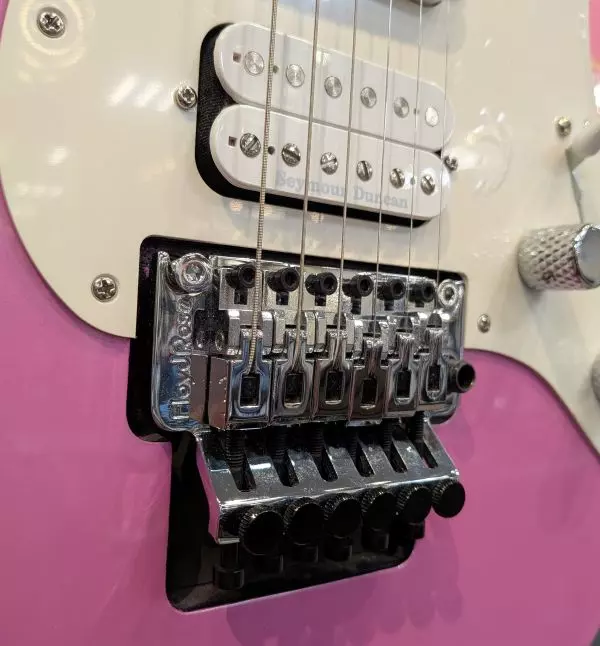
Floyd Rose tremolo bridge on a Charvel So-Cal Style 1 guitar. Note the humbucker pickup on this flashy, rock-oriented Strat-style guitar.
Luxury Features
A final word about what we might call specialty or "luxury" features. These range from battery-powered "active" pickups (useful for certain types of "heavy" music with high distortion requirements) to locking tuners (intended to stabilize tuning and simplify string changes) to additional strings beyond the standard 6. These features are rarely found on entry-level instruments and will probably be most useful for seasoned players with specific musical needs. Even if your guitar idol plays a 7-string guitar with active pickups, such an instrument is probably not an ideal first choice.
Price of an Electric Guitar
Guitarists are fortunate in that the tools of our art tend to be more affordable than those of other instruments. A pro-level guitar can be purchased for a price that will barely get you a saxophone student instrument, for example.
Most major guitar brands offer options with varying levels of refinement in just about every price range. Fender, for example, offers not just several price tiers and lines of guitars under its own brand name, but also several corresponding lines and price tiers in its Squier budget line. (Not to mention specialty instruments under their Gretsch, metal-focused Jackson, and '80s hard rock-oriented Charvel sub-brands!)
Some brands follow suit by offering both a "main" and a "budget" price tier, such as Gibson with its Epiphone budget line, Ibanez with its Gio line, or PRS with its SE line. By contrast, other brands, including Gretsch and Jackson, offer a wide range of price tiers all under the same brand name. In those cases, prices tend to reflect features and/or country of manufacture.
The bottom line, though, is that just a few hundred dollars can get you a quality instrument that you can enjoy for decades. More money brings you more options, such as specialty finishes and features. Regardless of how much you're ready to spend, you'll likely find an instrument that inspires you. Let your sales associate know your budget and what kind of music you're into, and we'll help you choose a quality instrument!
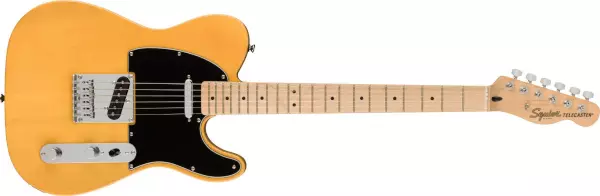
A Squier Affinity Telecaster. The slim, contoured body of this affordable instrument sits closer to you than other Telecasters. But it still has the traditional Tele pickups, electronics, and sound.
Recommended Beginner Electric Guitars
Here are some player-approved, affordable first electric guitars!
- The Squier Sonic Stratocaster may be the single most popular electric guitar in the world. It's available in a range of colours and pickup configurations. Its hardtail cousin, the Sonic Telecaster, is an ideal choice for players for whom a tremolo unit might be surplus to requirements. The Sonic Mustang is another hardtail model, with a shorter scale and smaller body, ideal for younger or smaller players.
- The Squier Affinity Stratocaster and Affinity Telecaster offer a slightly more refined experience than the Sonic series, plus a slightly thinner (and usually lighter) body. Meanwhile, the Affinity Jaguar offers a genuine offset guitar experience, and the Affinity Starcaster unlocks semi-hollow tone and feel at a very accessible price point.
- The Kramer Focus offers a Stratocaster alternative that is slightly modified for hard rock, at a great price.
- The Kramer Beretta is a hard-rock/metal machine stripped down to essentials: one powerful humbucker pickup, one volume control, and a trem. What it lacks in subtlety, it makes up for with probably the most fun per dollar of any new guitar currently available.
- The Epiphone Tribute Les Paul and SG offer stripped-down access to those classic sounds and shapes.
- The Gretsch Streamliner Jet Club is a hardtail single-pickup rocker that is kind of like a Les Paul/Telecaster hybrid, and it offers a great playing experience at an unbeatable price. A dual-pickup version is also available at a slight upcharge.
- At a higher price point, the Squier Classic Vibe series of instruments (including, but not limited to, several permutations of the Strat, Tele, single-pickup Esquire, Jazzmaster, Jaguar, and Mustang) offers vintage-style playing experiences at a level of refinement that even pros love. These are my go-to instruments to demonstrate equipment in the store.