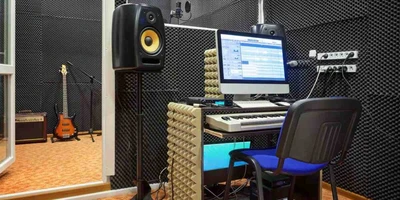
Studio Acoustics - Making Your Space Sound Perfect
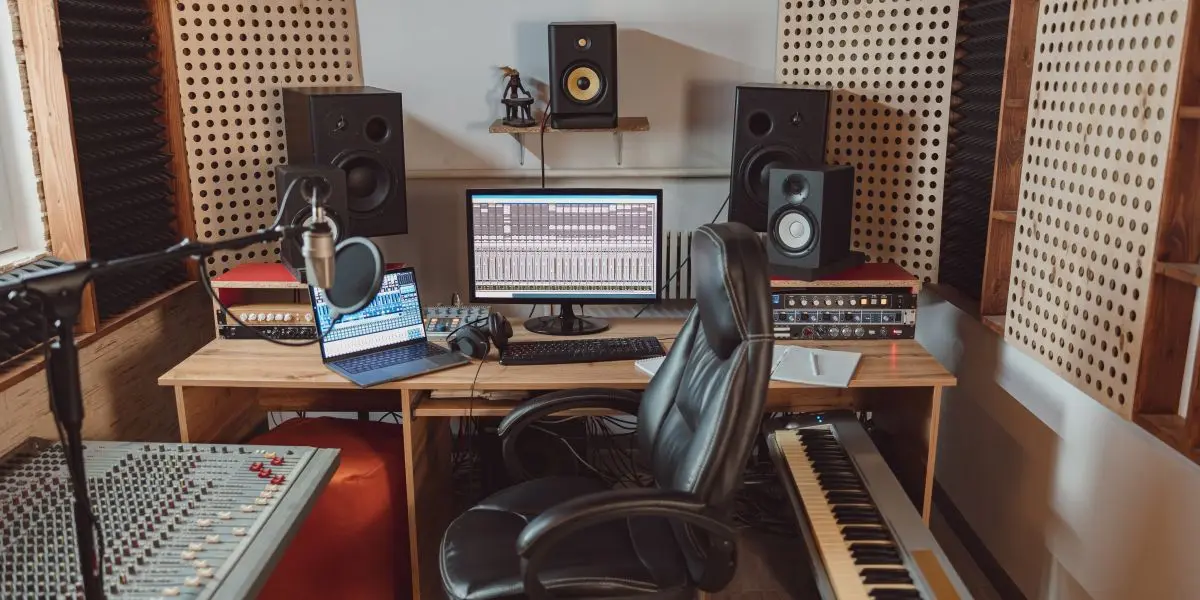
If you’re an audio engineer or music producer, your room is as important as your gear. You can have the best microphone, the latest plugins, and top-tier speakers, but if your room doesn’t have the right acoustic treatment, your sound will be off. You’ll find yourself second-guessing your mixes, and that’s frustrating.
I’ve been there, and I’ve learned that getting the acoustics right can make all the difference in how you experience your music.
This blog will walk you through the basics of studio acoustics and how you can set up your space to sound its best.
What Are Studio Acoustics, Anyway?
Studio acoustics is really about how sound acts in a room. It’s how sound waves reflect, get absorbed, and move around your space.
Without proper treatment, those sound waves can cause problems like muddiness, boomy bass, or frequencies that just don’t sound right. If you’re mixing in a room with bad acoustics, it’s like trying to paint in dim light—you won’t get an accurate picture of what you’re working on.
Why Does Room Treatment Matter?
When I first started out, I didn’t think much about room treatment. I thought I could just tweak things in my DAW and make them sound good later. But once I learned more about acoustics, I realized how much my untreated room was messing with my mixes.
Reflections from the walls, low-end buildup in the corners, and strange hollow sounds all made it tough to make the right choices.
With good acoustics, you hear your mix as it really is, without the room getting in the way. This helps you make the right choices, like turning down the bass, adding reverb, or tweaking the EQ.
The Basics of Room Treatment
The main goal of room treatment is to manage how sound moves in your space. To do this, focus on three things: absorption, diffusion, and reflection control.
1. Absorption: Soaking Up Problematic Sound
Absorption materials soak up sound waves, helping reduce echoes and reverb. When sound hits a surface, it either bounces off or gets absorbed. Adding these materials reduces sound bouncing too much.
- Foam panels are commonly used to treat mid- and high-frequency sounds.
- Mineral wool or fiberglass is denser and works better for low-frequency absorption (this is what you use for bass traps).
Basically, absorption stops your room from sounding too echoey or “live.” It’s like putting a sponge in your room to soak up extra sound.
2. Diffusion: Scattering the Sound
While it’s good to absorb some sound, you don’t want to overdo it. A totally dead room can feel unnatural. That’s why diffusion is important. Diffusion scatters sound waves so they don’t bounce straight back at you.
- Diffuser panels are designed to break up sound waves, creating a more natural and balanced sound.
- You can also use things like bookshelves, furniture, or irregular surfaces to naturally diffuse sound.
Diffusion helps your mixes keep their life and depth, so they don’t end up sounding flat or boxy.
3. Reflection Control: Managing First-Reflection Points
One of the main problems in untreated rooms is first reflections. This happens when sound from your speakers hits the walls, ceiling, or floor and bounces back toward you. These reflections can mess with how you hear the stereo image and depth.
To control this, you need to treat the first-reflection points:
- Place absorptive panels on the walls and ceiling where sound from the speakers will first hit.
- Try the mirror trick to find these spots. Sit where you mix and have someone move a mirror along the wall. Wherever you see your speakers’ reflection, that’s where you should add treatment.
Speaker Placement: Get the Angle Right
Speaker placement is also really important. Even if your room sounds great, putting your speakers in the wrong place means you won’t get an accurate sound.
Here’s what I’ve learned works best:
- Form an equilateral triangle: Your speakers and your listening position should form a triangle, with the same distance between each speaker and your ears.
- Keep your speakers at least two feet away from the walls, especially the back wall, to prevent low-end buildup.
- Aim for a symmetrical room. If one side has more treatment than the other, you’ll get sound imbalances.
Bass Traps: Tackling Low-Frequency Issues
If you’ve struggled with boomy bass or muddy low-end, you know how annoying it is. Bass traps help with this by absorbing low-frequency energy that builds up in the corners of your room, where sound waves tend to pile up.
I strongly suggest putting bass traps in the corners of your room, since that’s where low-end buildup usually happens. You can buy ready-made bass traps at Long & McQuade or make your own by wrapping mineral wool in fabric.
Simple, Budget-Friendly Solutions
Not everyone has the budget for a fully tricked-out studio. But that doesn’t mean you can’t treat your room on a budget. Here are some easy and affordable solutions:
- DIY bass traps: You can make your own using insulation material and fabric.
- DIY panels: Acoustic foam panels or rock wool wrapped in fabric can be easily made and placed around the room.
- Furniture: Bookshelves, thick rugs, and heavy curtains can all help absorb sound, especially in smaller studios.
Measuring and Fine-Tuning Your Room
After you’ve handled the basics, it’s a good idea to measure your room’s acoustics.
Tools like Room EQ Wizard and measurement microphones can help you find any leftover problem spots. They’ll help you fine-tune your setup so your mixes are as accurate as possible.
Wrapping It Up
In the end, acoustics are key to getting great sound. Whether you’re recording, mixing, or mastering, treating your room is one of the best things you can do.
Even small changes, like adding bass traps or treating first-reflection points, can dramatically improve how your space sounds.
Take it one step at a time. Start with the basics, try out different treatments, and don’t be afraid to make changes as you go.
A well-treated room lets you hear your music as it’s meant to sound, and that can make all the difference when you’re creating something great.
Check out Long & McQuade’s extensive inventory of acoustic treatment solutions from foam sheets and panels, bass traps, room systems, sound diffusers, reflection filters and much more.
Happy mixing!