

Ruminating on Rudiments
Last Updated: December 3, 2025
A Brief History
The origins of drum rudiments can be traced back to the 1300s in Switzerland. In those days, drums were employed to direct pole-arm-wielding infantry in combat. For centuries, the rudiments were essential for training European military drummers.
As settlers migrated to the new world, these military traditions accompanied them. Tens of thousands of drummers utilized their rudiments to guide soldiers during the American Civil War. Drummers were an active and essential part of warfare until 1917.
Eventually, drumming grew beyond its military roots and became the backbone of popular music. The battlefield snare drum expanded to the “trap set”, yet the rudiments used to educate young drummers remained largely unchanged.
In 1933, the National Association of Rudimental Drummers published 26 Standard American Drum Rudiments. In 1984, the Percussive Arts Society expanded the list of “essential” drum rudiments to 40.
In recent years, drum set artists and instructors have combined these rudiments into hybrid forms to challenge themselves and their students further. Nevertheless, when written out, the rudiments used to teach today would still be recognizable to drummers from the Battle of Antietam!
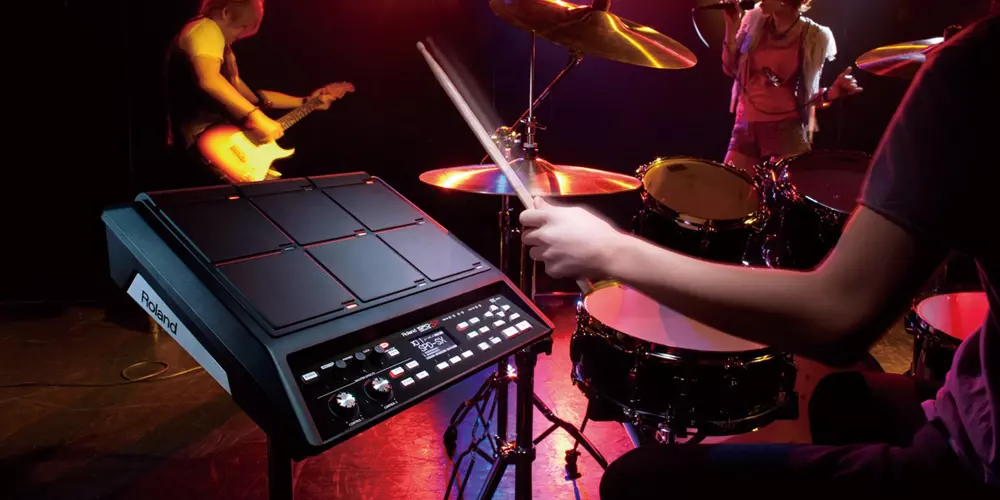
Music has changed, drum sets have evolved, and a myriad of new tools are available to musicians and teachers. Why are rudiments from hundreds of years ago still relevant to modern instruction?
Still a Solid Foundation
The most popular way to explain rudiments to beginners is to equate them to the letters of an alphabet or words in a language; the more extensive drummer's “vocabulary” of rudiments, the more fluently they can “speak” on the instrument. Moreover, knowledge of rudiments facilitates communication between drummers. Saying “that fill begins with an inverted paradiddle” is more efficient than describing the sticking stroke-by-stroke.
Music teachers and drum instructors agree with the language analogy but also emphasize that studying rudiments enables drummers to play more ergonomically.
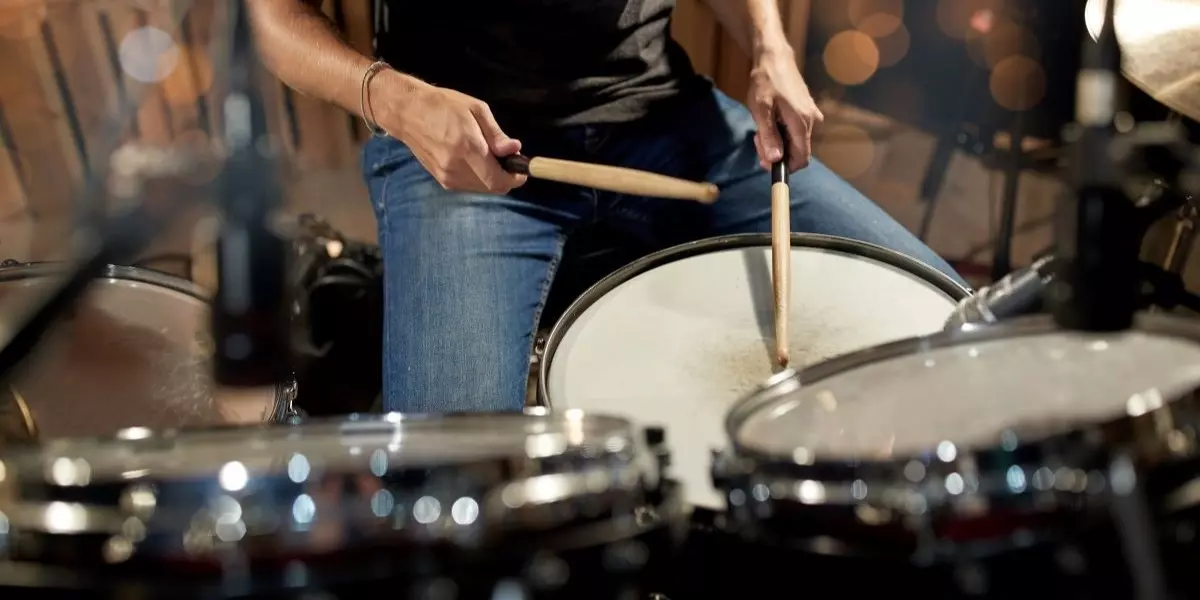
It's worth noting that alternate-only sticking can lead to challenging situations when it becomes necessary to move quickly between the floor tom and hi-hat. For example, knowing how to apply a double stroke roll or a paradiddle can eliminate much of the awkward arm-crossing at fast tempos.
Often, rudiments are presented to beginning drum students as dexterity-building exercises, but rudiments teach more than just coordination. When practised correctly, they also improve a drummer’s rhythmic accuracy and technical control.
Accuracy, dexterity and control are vital tools for expression on the drums.
Effective Rudimental Practice
When learning a new rudiment, clarity, dynamics and stick control are critical. Many beginners tend to prioritize speed over cleanliness when playing rudiments. Emphasizing accuracy over speed and working with a metronome during the early stages of development are invaluable.
Unfortunately, disciplined rudimental practice can seem monotonous to younger students.
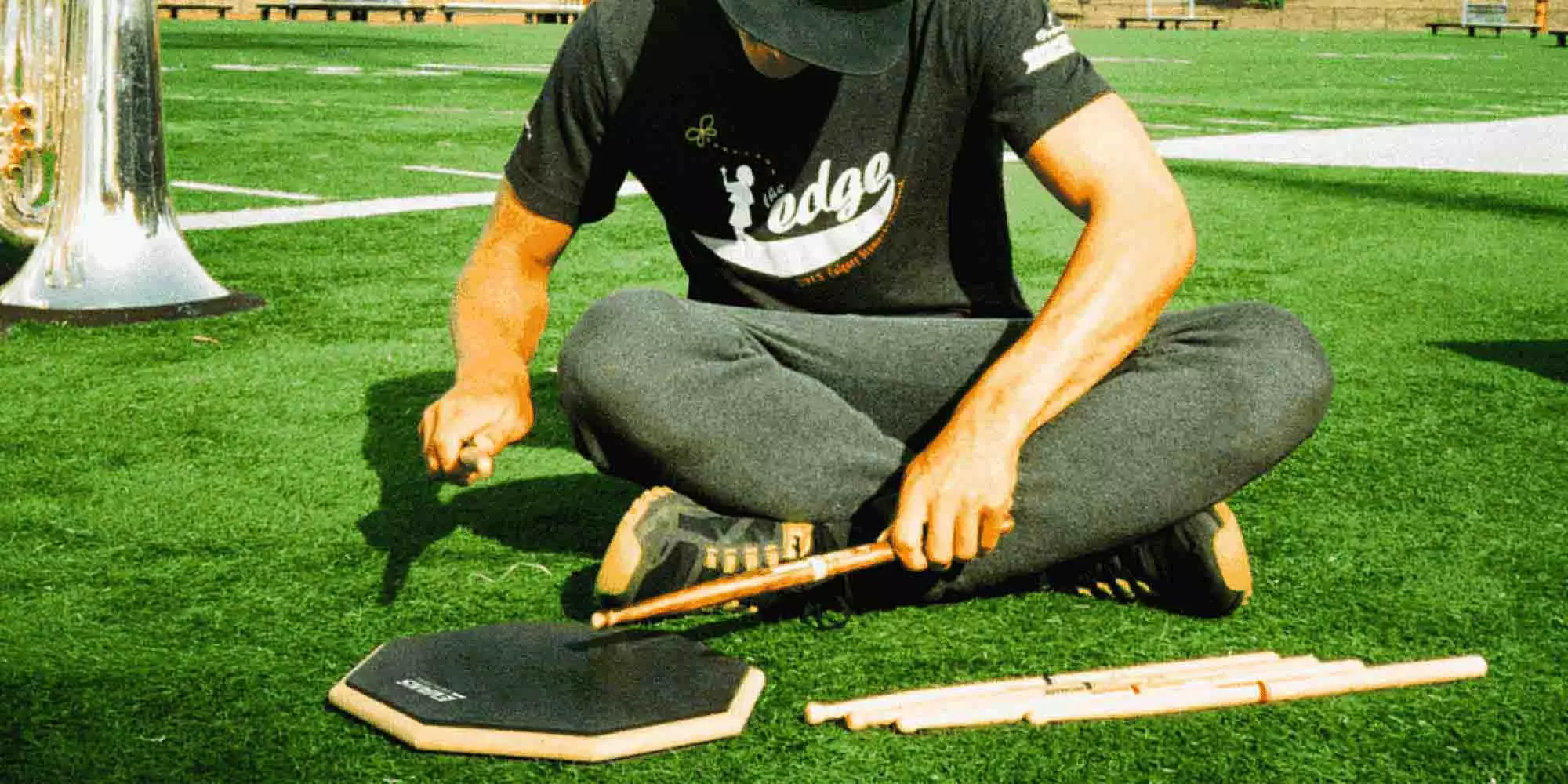
Great teachers like Jake Lewis and Vic Freitas (Long & McQuade - Cambridge, ON) find ways to make rudimental training challenging and enjoyable for students of all levels. Both instructors focus on drum set applications over strict pad work using practice pads.
Jake explains, “I teach everything with the focus on 'how can we use this on the kit?'”
Vic recommends practising rudiments across multiple limbs rather than focusing solely on the hands. One exercise he suggests is playing a paradiddle with the feet while playing a 4/4 rock pattern with the hands. He also encourages students to attempt to play all rudiments while substituting a foot for one hand.
Jake challenges his drummers to create compelling drum solos from a single rudiment, varying only the accent patterns and orchestration of the notes.
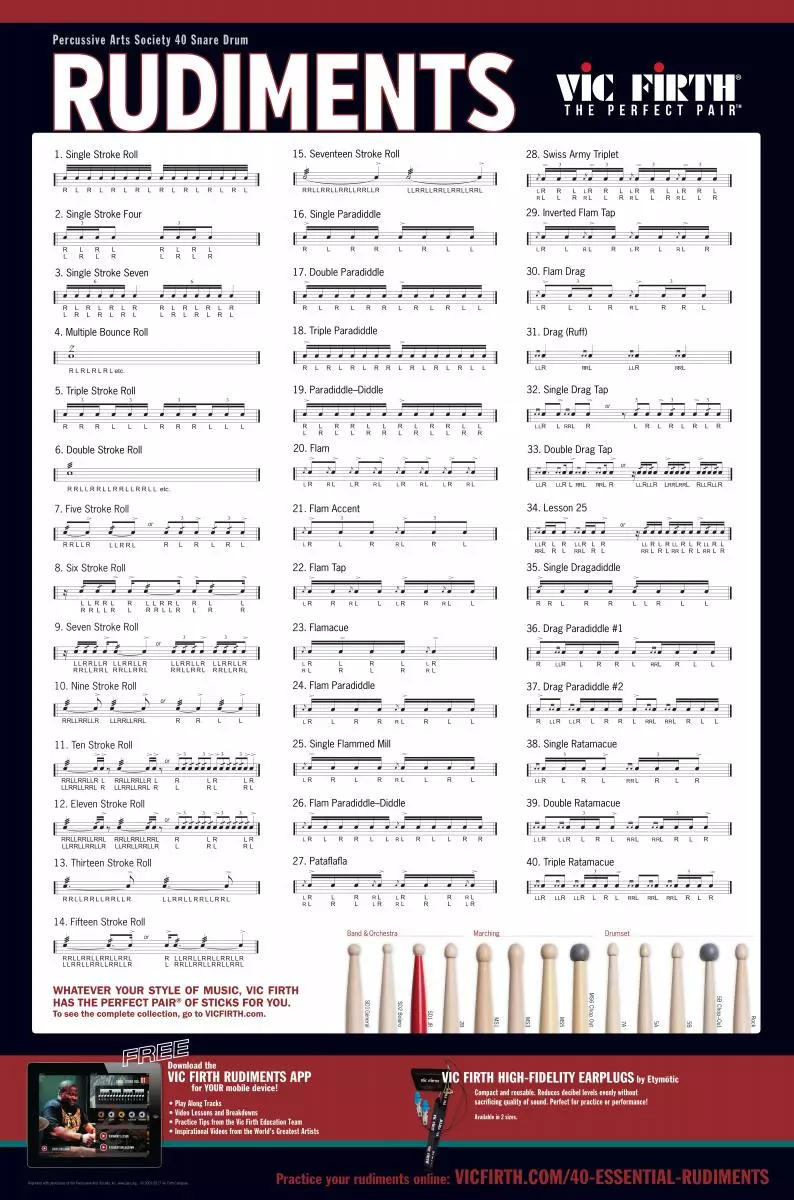
(Check out our products from Vic Firth)
Building Blocks of Musical Drumming
It is possible to play drums without studying rudiments, just as it is possible to strum a few chords on the guitar without understanding scales or advanced music theory.
However, drum teachers consider rudiments “one of the non-negotiables” of learning the instrument. Think of it like learning the language of drums.
In literature, Ernest Hemingway expressed himself in simple, direct language, while James Joyce employed complex symbolism, literary allusions, and invented words when it suited him. Yet for both writers, their choice of language was an expression of artistic decision, not a technical limitation.
Likewise, drummers may choose their own approach to the instrument, but studying drum rudiments will enhance their technical abilities, enabling them to "choose their words" more effectively in any musical situation.
That said, not all of the “Standard Rudiments” will be equally important to all drummers in all situations, and the teachers mentioned in this article don't consider every rudiment equally “essential.”
Jake and Vic regard rudiments as tools to train drummers to overcome technical limitations and potential frustration, rather than as ends in themselves.
The number of hybrid rudiments with fun names like “Cheeselets,” “Cupcakes,” “Dragateenths,” “Eggbeaters,” “Flam Drag-a-poos,” and “Grandmas” keeps growing. Still, unless you are seriously involved in marching band, you are unlikely to study all of them.
In Summary
Rudiments predate Michelangelo's painting of the Sistine Chapel ceiling by at least two hundred years, yet they are still the basic building blocks of modern drumming.
Rudiments are fundamental tools to help modern drummers develop facility on the drum set.
Successful students and teachers of the drums find creative ways to regularly incorporate rudiments into their daily practise.
Learning applicable rudiments can help drummers overcome technical obstacles to self-expression.
Once internalized, rudiments become additional “words” in a drummer's vocabulary, empowering them to say more from their throne!
Tony is a drummer, martial artist and painter. In his 30 years behind the kit, he has worked with numerous rock, blues, and country acts on local and regional levels. Tony is the manager of our store in Truro, NS.