

Explaining the Types of Guitar Pickups
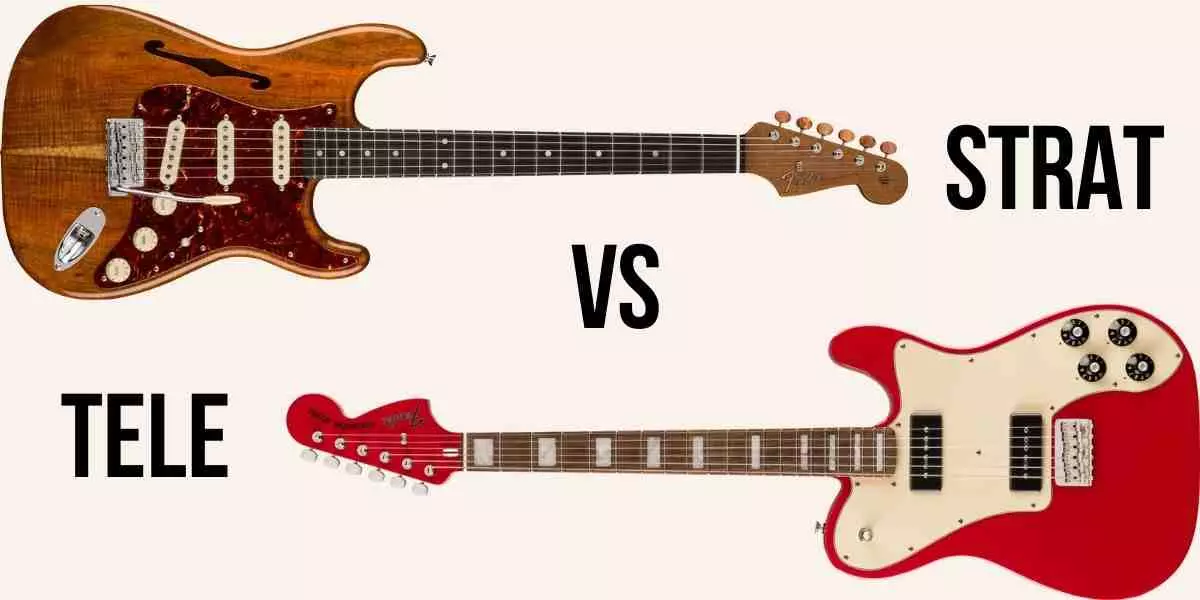
Most electric guitar players can tell the difference between a Stratocaster and a Les Paul guitar. Visually, they’re quite different, and those differences are easy to spot. What is not so easy to understand is the differences between their electronics, specifically their pickups. Do they just look different, or is there more to them?
All electric guitars have at least one pickup; some have two, while others have three. They come in different shapes and sizes, but they all operate the same way.
What Does a Guitar Pickup Do?
The goal of an electric guitar pickup is to sense the vibration of the strings and translate that movement into an electrical signal. That signal travels through your volume and tone controls and onward to your pedals and/or amplifier. From there, it converts into an audible sound.
Variations in a pickup’s construction mean that the electrical signal they produce can sound different from another. If you have two identical guitars with identical pickups, but one has the pickup higher up the neck, the resulting sound would be different.
There are three main categories of guitar pickups: single-coil, humbucker (dual-coil) and P90. This blog explains the differences between them and explores the features that make them unique.
Single-Coil Pickups
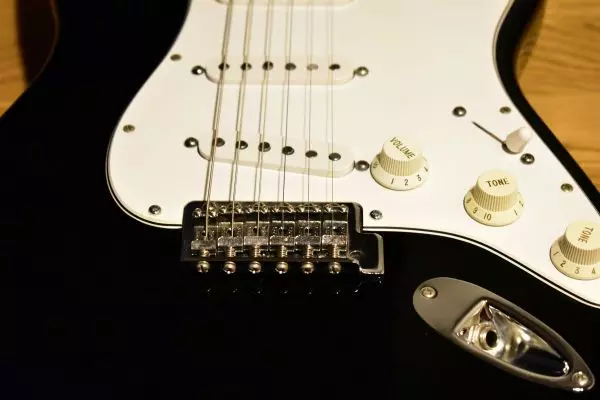
The bridge and middle pickups on a Stratocaster. While these might look slightly different from those on a Telecaster, they are in fact the same design.
Single-coil pickups are the most common and simplest in terms of build and construction. They usually have six independent magnets (one for each string) and are wound with thousands of turns of very thin copper wire, forming a coil. That’s it!
The sound profile of single-coil pickups is typically very bright and clear, particularly when driven through an undistorted amplifier. When played with distortion, they often sound much warmer, although the note definition usually remains.
The downsides to single-coil pickups are their inherent noise. Due to their simple design, radio signals, power transformers, Bluetooth signals, etc can negatively affect the sound. This results in audible signal noise alongside your guitar’s tone.
Some people find this unacceptable, but most learn to deal with it. The fact is that you cannot have that lovely, bright, jangly tone without the accompanying noise, and most players are happy to make that compromise.
Single coil pickups are typically found in Fender guitars like the Stratocaster, Telecaster, etc, although just about every brand of guitar has at least a few models equipped with these pickups.
Humbucker Pickups (Dual-Coil)
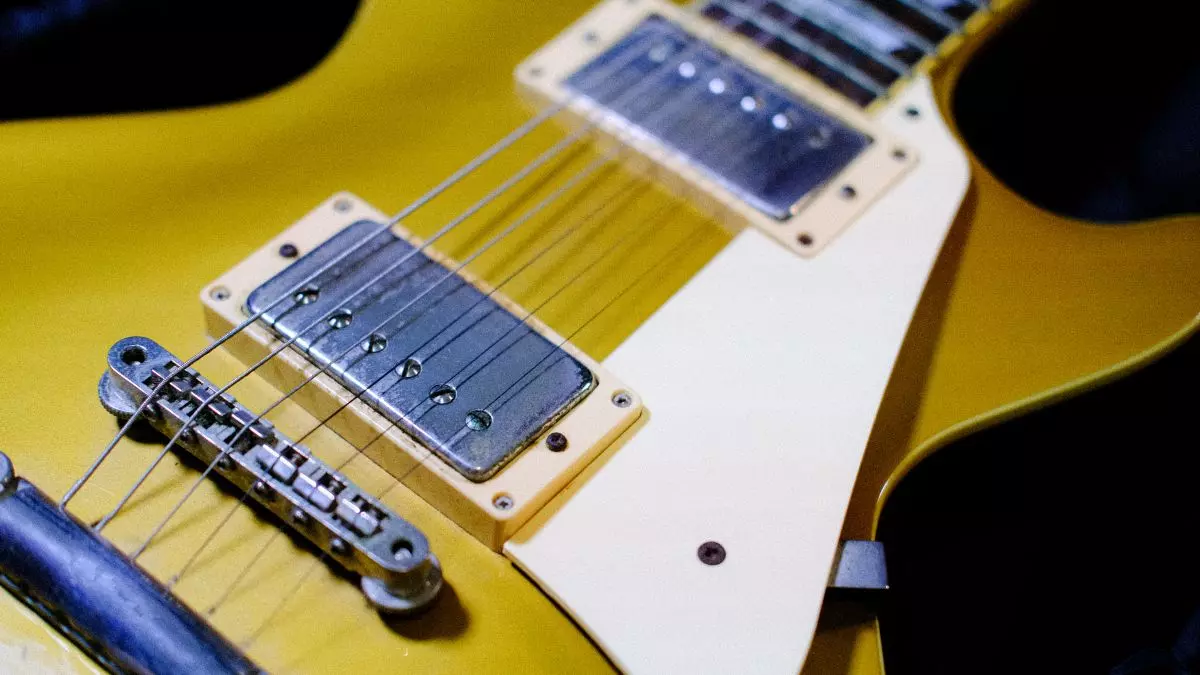
A bridge humbucker on a golden classic Les Paul. Humbuckers can be had either covered with a metal shield, or uncovered with their bobbins on display
A humbucker is essentially two single-coil pickups (aka double-coil) wired together. The use of magnetic field differs, as do the coil windings, but the underlying technology is the same.
Because the two coils are wired together, the higher output is more prevalent than that of a typical single-coil unit. An example of this is a bridge humbucker on a mighty Les Paul Standard. Humbuckers can be either covered with a metal shield or left uncovered, with their bobbins on display.
The sound profile of a humbucker is different from that of a single-coil pickup: it places much more emphasis on midrange and bass frequencies, with less treble. This is largely because of the joining of the two coils - the way they’re wired together enables the humbucker reject outside noise, and as a result, they are almost completely noiseless. They also handle distortion differently, giving the player much more control over their tone.
As with single-coil pickups, almost every brand offers models with humbuckers. The most widely recognized humbucker-equipped guitars come from Gibson guitars, including the Les Paul, SG, and Flying V.
P90 Pickups
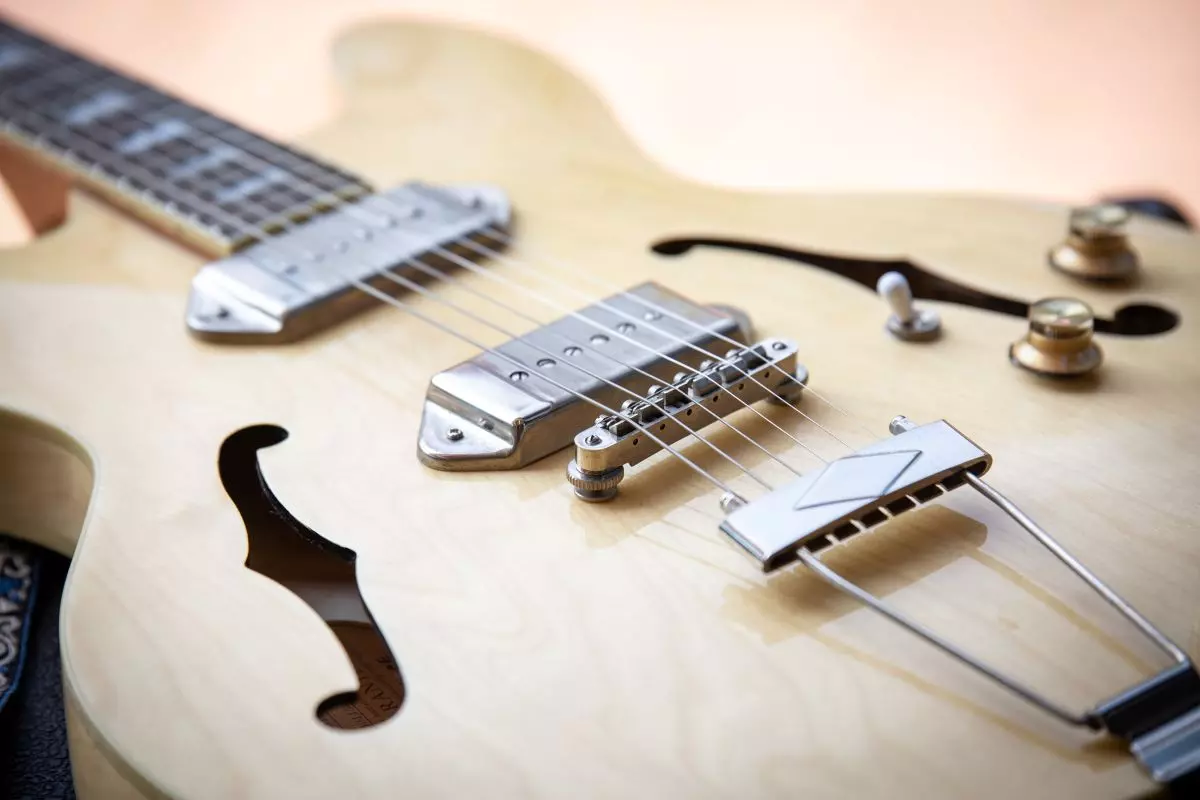
P90’s are available in two configurations: “soapbar” and “dogear” mounts. The only difference is the mounting method.
The P90 pickup is a hybrid of single-coil and humbucker designs, combining elements of both styles. They have the clarity of single-coil pickups but with far more midrange and bass, and they easily compete with a humbucker in output.
While not nearly as common as its siblings, P90S can be found on Epiphone Casinos, Les Paul Jr. models, Yamaha Revstars, and others.
How does one choose which pickup to use in their guitar? Well, the good old-fashioned answer: it depends. It depends on whether you're shopping for a specific brand and model, and sometimes even on the exact variant, such as a colour.
Choosing a Guitar Pickup
The good news is that most manufacturers offer variants of their mainstream models, each with different pickups.
For example, Gibson’s Les Paul Standard is available with either the regular humbuckers or P90’s. Fender offers its Stratocaster in the classic single/single/single configuration and an HSS version with a humbucker in the bridge position. There’s a decent chance your favourite guitar model is available with the pickups you prefer.
However, not every model is available in the exact variant you might want. For example, the HSS Strat might only be available in red, black, or sunburst, so if you want green, you might be out of luck.
The same goes for a P90-loaded SG - that model may only be available through Epiphone, and not from Gibson. It depends on what the manufacturer wants to build and what they think they can sell. Sometimes, you're just at the mercy of their choices.
Swapping Guitar Pickups
One of the benefits of pickups is that you can swap your existing pickups for direct replacements from other manufacturers. Some of the best-known pickup manufacturers include Seymour Duncan, Dimarzio, and EMG.
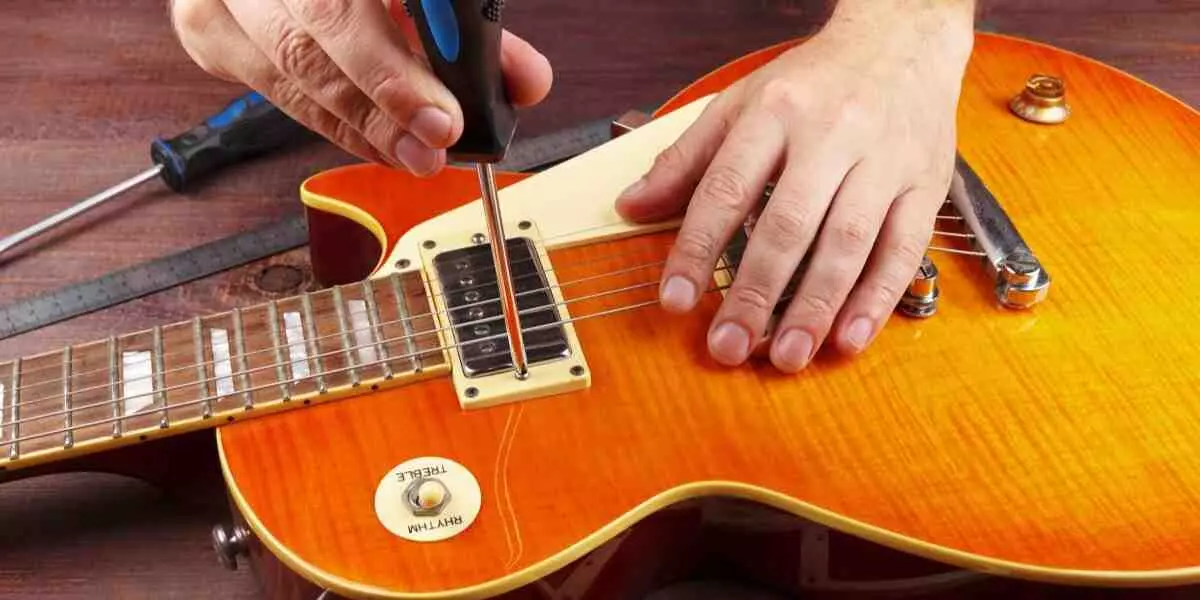
A word of warning, though: swapping pickups can be a slippery slope. You won't know what a replacement pickup will sound like in your guitar until you install it. If you don’t like the result, you’ll have to remove it and resell it as a used part, which can be time-consuming and costly. Ensure you know exactly what pickup you want and what the expected sound outcome will be before committing to a pickup swap.
That said, one of the best ways to spruce up a low-cost guitar is to replace its pickups. These entry-level models often come with middling pickups, which produce a basic tone. If you replace these with components from the aforementioned manufacturers, the result can sound like a brand-new guitar!
Research Your Pickups
My advice for buying replacement pickups is to do as much research as you can. Ideally, try playing a guitar with the pickups you want and get a feel for how they perform with both clean and dirty amps. Make your best guess as to how they’ll sound on your guitar, then go for it and don’t look back.
If you like humbucker guitars, then buy yourself a Gibson or an Ibanez. If your tastes lean towards P90’s, perhaps there’s a Revstar in your future. Resist the temptation to buy a set of pickups with a guitar around them, or conversely, buy a guitar with the express intention of replacing its pickups ASAP. Buy the whole guitar for what it is - an inspiring instrument which feels AND sounds good to you.
Happy noodling!