The Most Important Part of a Signal Chain For Creators
This is a question we get asked all the time at Long & McQuade and understandably so. Producers, engineers, and creators constantly look to us for insight on the latest gear or opinions on classic gear we've tested.
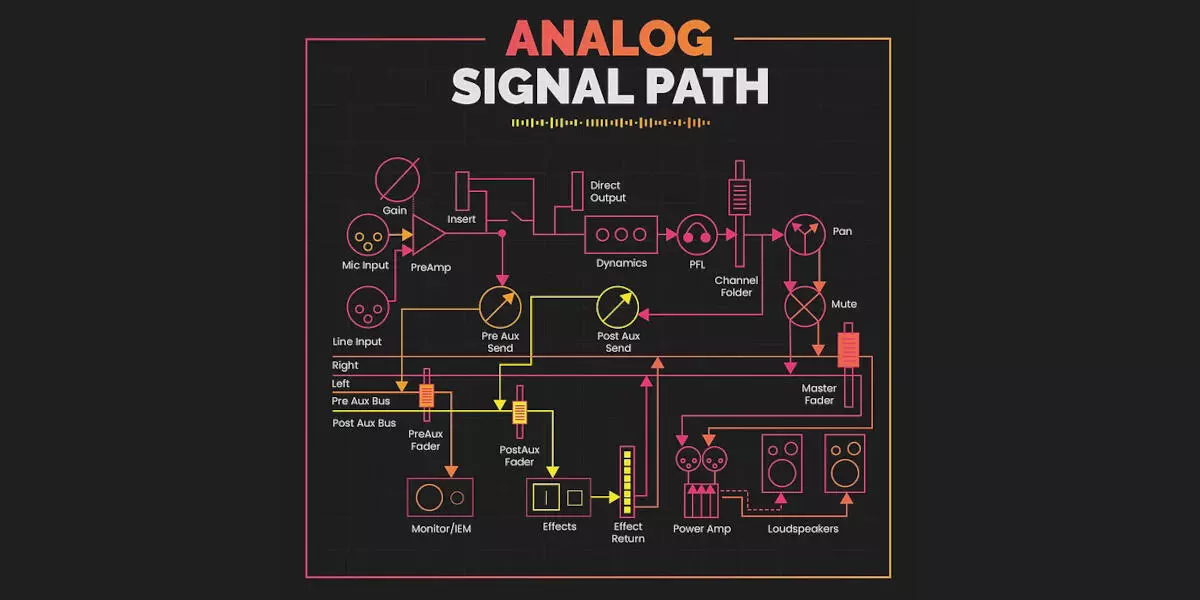
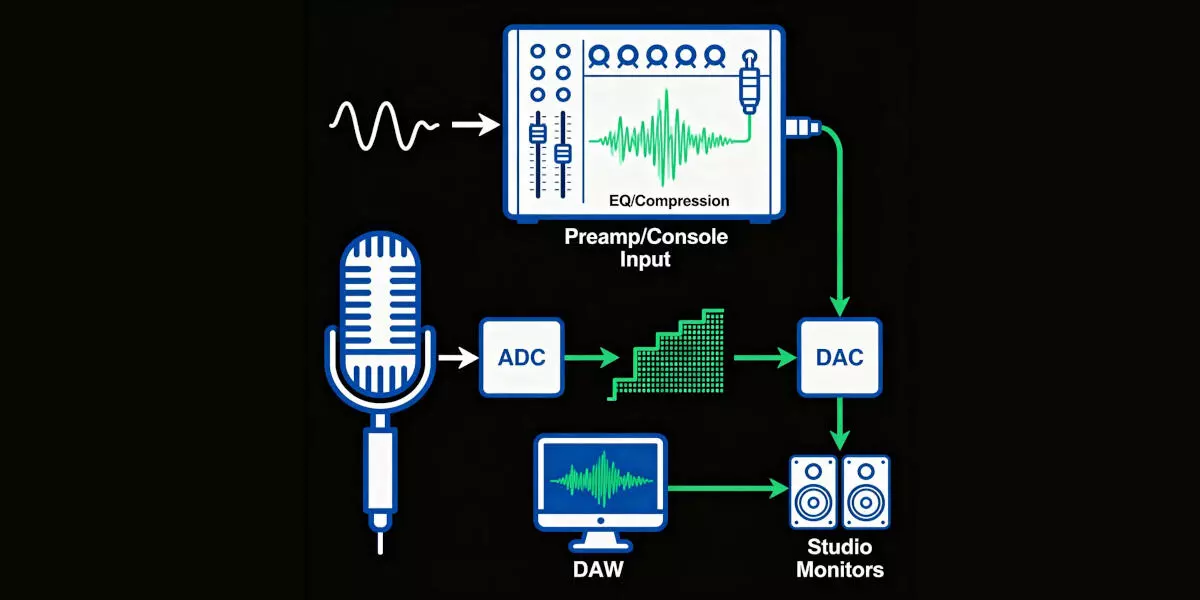
A signal chain refers to the path audio takes from your original source through your devices to your final output. It utilizes all your devices including your microphone, preamp and interface for processing and monitoring.
So, we could just say something like “grab a Neumann U67 and a Rupert Neve Shelford Channel” and call it a day… but hang on a minute.
Maybe the question shouldn’t be “What is the most important piece of gear in a signal chain?” Maybe it should be “What is the right signal chain for each individual client?” Let’s explore that angle.
Objective and Subjective Truths
From an objective standpoint, you could dive into data sheets, compare THD specs, headroom, harmonic distortion—and that’s all valid. But those numbers don't always reflect what you need as a creator.
Think about it: whether you’re running a commercial studio or working out of a downtown condo, your gear needs will vary dramatically. What’s “most important” in one context might be totally unnecessary in another.
So instead of asking: “What’s the best gear?” and “What’s the most important part of a signal chain?” Let’s ask: “Who is it for?” and “What kind of signal chain would best suit them?”
This article will focus on three common use cases:
- The aspiring artist/producer working from an urban condo
- The professional voice-over artist
- The home-based or small commercial post mixing composer, producer/engineer
We’ll leave out large commercial studios as those folks already have deep gear arsenals and know what they’re after. For everyone else, let’s break it down.
A Quick Caveat
I'd like to add a caveat here: any signal chain will be affected by cabling and clean power. At L&M, we have many options available if you need quality cables and power. I'd encourage, especially those new to recording, to take some time to research the importance of this consideration.
1. Aspiring Artist in the City: You Are the Signal Chain!
Billie Eilish started recording demos on basic gear in her house. That’s an inspiring story and a good reminder that you, your creativity, and your ideas are the first and most important part of any signal chain.
Yes, record labels and A&R teams appreciate polished demos. But if the song doesn’t resonate, no amount of expensive gear will save it. So how do we help someone get those brilliant voice notes and song ideas into Logic or Pro Tools?
Well, this is often when people ask, “What’s the best mic or interface I can get for a home setup?” And quickly, they realize that condenser mics can get expensive fast. A professional studio-grade condenser vocal mic usually starts around $4000, with high-end models easily crossing $10,000.
The good news is that there are great, affordable options to get started.
Entry-Level Audio Essentials
The Shure SM57 and SM58 are absolute legends in the microphone community. Nearly every major studio has used them at some point. They’re durable, versatile, and sound great, especially for the price.
You'll likely keep your Shure dynamic mic forever. And when you upgrade to a higher-end condenser, your 58 can become your live performance mic.
For an interface, the Universal Audio Volt 2 is a solid, well-built unit that comes with useful plugins and software to get you going. Pair that with a set of Sennheiser HD 280 Professional headphones, which are basic but great for the budget to get started making hits, and you have a complete beginner signal chain that works.
If you must have a condenser mic on a budget, you can also consider the Lewitt LCT 440 Pure or sE Electronics X1 S. They offer great bang for your buck, with options under $400.
At the end of the day, for the aspiring artist, you are the most important part of the signal chain. Get a basic mic, an interface, and a decent pair of headphones, and start recording.
2. The Professional Voice-Over Artist: The Mic Is Everything
Not to be confused with podcasters, voice-over artists often work under tight deadlines with high expectations. Especially in urban settings like Toronto, you're likely working from a condo with limited space, but you still need to deliver broadcast-ready quality.
In VO, silence is golden. You’re often working with dry vocal takes that will sit front and center in a commercial or film, so room reflections and background noise must be minimized.
Acoustic Treatment
Room treatment (not just soundproofing) becomes an important part of your signal chain as a voice-over artist. Some great options for room acoustic treatment include: Aston Halo/Shadow, sE Reflection Filter Pro, & the Primacoustic London 10 Room Kit.
If you can't build a proper vocal booth, moving blankets, rugs, and heavy curtains are a great DIY solution for deadening reflections. We often see clients convert closets into makeshift booths, and it works!
Microphones
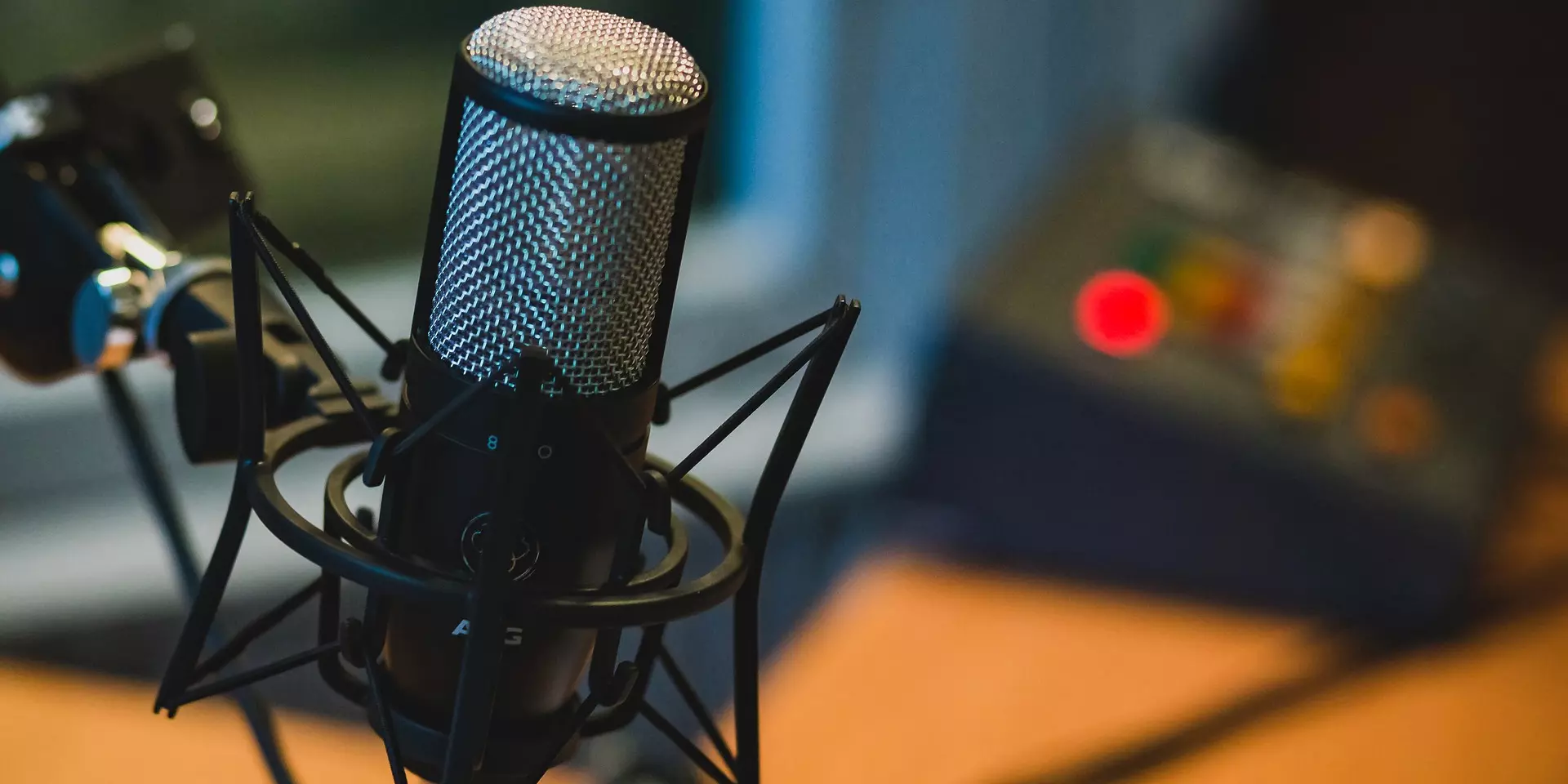
When it comes to microphones, the mic is king. It’s your tool of the trade.
The Sennheiser MKH 416 shotgun microphone at $1350 is an industry standard for film and VO work and pairs beautifully with video. The previously mentioned Shure SM7B is a popular dynamic microphone that has stood the test of time. For those who prefer a condenser microphone, the Rode NT1-A is widely praised for its extremely low noise floor and detailed, natural sound.
Other strong contenders include the Audio-Technica AT4040, which offers a balanced and reliable vocal capture, and the Lewitt LCT 440 Pure for its modern clarity and value. All of these microphones are well-reviewed, trusted by creators, and capable of delivering broadcast-ready results without pushing your signal chain into high-end pricing territory.
Interfaces
To support your microphone, audio interfaces such as the Universal Audio Apollo Twin X Duo Gen2 or the RME Babyface Pro FS both offer excellent quality in the $1500 range. UA brings plugin flexibility with Unison preamps, while RME is known for ultra-clean preamps.
If the budget is tight, there are more budget-friendly interfaces, such as the UA Volt 176, which is a surprisingly great alternative for under $300.
Headphones & Monitors
Closed-back headphones like the Audio-Technica ATH-M30x at $99 are a solid entry option. For studio monitors, options such as the Yamaha HS5, Dynaudio LYD5, or ADAM A7V provide increasing levels of accuracy depending on your budget.
Even if you’re not mixing final products, you need great headphones to be confident in what you’re hearing, especially for setting gain levels and EQ curves.
3. The Professional Post Engineer: It’s All About Monitoring
These days, in a digital world, post-production careers are thriving, especially among talented engineers working from smaller commercial spaces or pro home setups. Many of our clients in Toronto and the GTA are mixing music for Netflix series, composing scores, or finishing up commercial spots.
Here, the recording may already be done elsewhere, and you're responsible for mixing the final product. There are deadlines, quick turnarounds and minimal revisions, which means your monitor equipment is essential and very much a livelihood.
Monitors
High-end monitor options such as the ATC SCM25 Pro MK2, ATC SCM45A Pro, Neumann KH310, and Dynaudio BM15A are all trusted tools in professional mix environments. At this level, accuracy and translation are everything.
Mix Bus Processors
Beyond monitoring, mix bus processors such as the Rupert Neve Master Buss Transformer, Rupert Neve Master Buss Processor, SSL Bus+, Dangerous Music VCA Compressor, Dangerous Bax EQ, and Manley Massive Passive EQ are powerful tools for shaping and finishing mixes with precision and character.
- Rupert Neve Master Buss Transformer
- Rupert Neve Master Buss Processor
- SSL Bus+ Compressor Module
- Dangerous Music VCA Compressor
- Dangerous Music Bax Mastering Shelving EQ
- Manley Massive Passive Stereo Tube EQ
Interfaces
For interfaces, systems like the AVID MTRX II Base with Dante, Apogee Symphony MKII 8x8 Thunderbolt, Apollo X16 (Gen 1), and RME Fireface UFX III offer high-end I/O and pristine AD/DA conversion. These setups are designed for engineers who demand flexibility, reliability, and sonic integrity.
In this case, you’re already working at a high level. What matters most is accuracy—and for that, you need monitoring that reveals every nuance of your mix.
Monitoring is the most important part of the signal chain for a post-mixing engineer, followed by high-end I/O and outboard gear.
Final Thoughts
There’s no one answer to the question, “What’s the most important part of a signal chain?” It depends entirely on who you are, what you’re doing, and where you’re doing it.
Whether you're a songwriter tracking demos, a voice artist landing national spots, or a pro engineer finishing a mix for a streaming platform, your needs will define what’s important in your chain.
And that's where we can help. If you’re looking to build, upgrade, or rethink your setup, reach out to your local Long & McQuade store. We’d love to help you find the right gear for your budget & use case.