
Comparing Different Kinds of Guitar Amplifiers
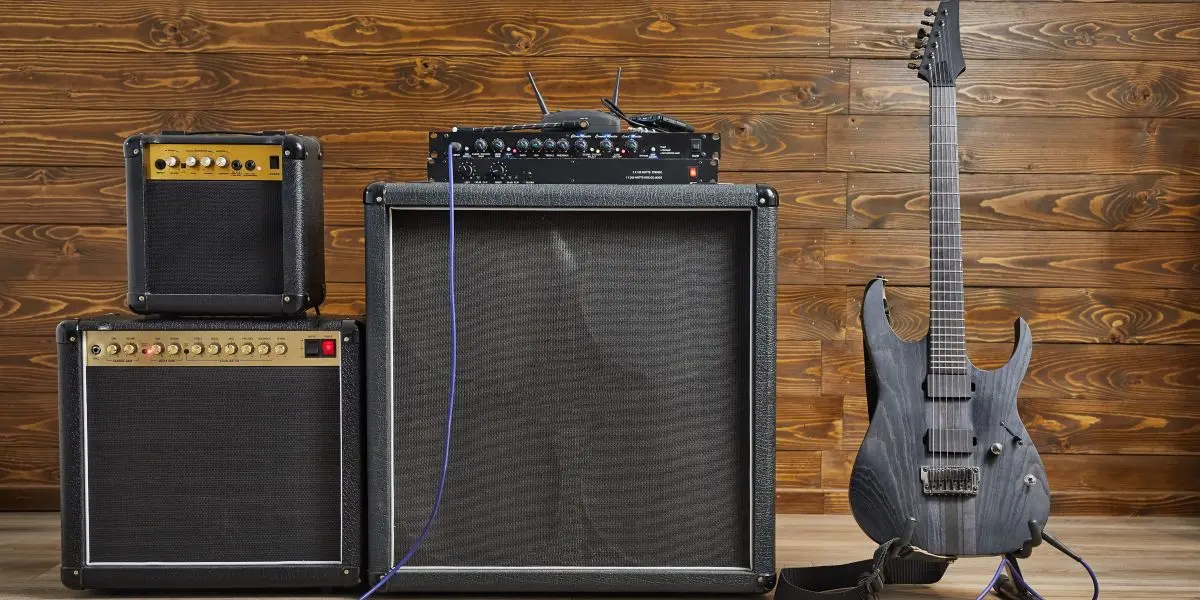
Did you just get your first Electric Guitar, bass, or Acoustic Guitar, but you are still deciding on which amplifier to choose? There are many factors to consider when choosing the right amp for you.
This blog will explore the first amps ever designed and how they evolved throughout the years, with product recommendations for different budgets.
Electric Guitar Amps
The first amplifier was designed in the 1930s to provide sufficient volume for the guitar to be heard over the brass and percussion in Big Bands.
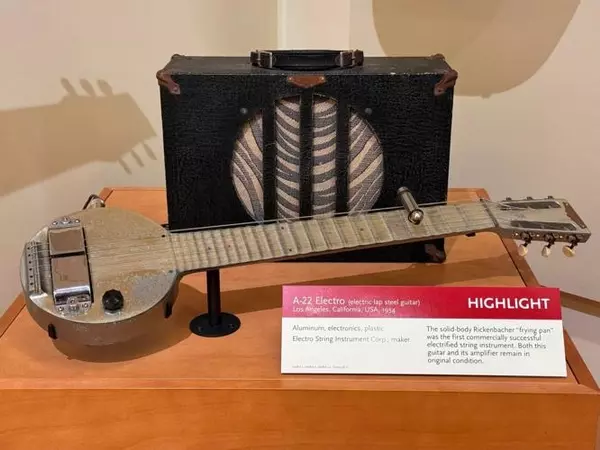
The Rickenbacher "Frying Pan" and its amplifier are displayed at the Musical Instrument Museum in Phoenix. [AP PHOTO/DARIO LOPEZ-MILLS]
Where It All Started
George Beauchamp and Adolf Rickenbacker were the first to create and market the electric guitar amplifier. Their famous “Frying Pan” consisted of a lap steel guitar, which captured the signal and sent it to a tube amp via electromagnetic pickups.
The guitar sends a small electrical signal, and the tubes amplify it by acting as a signal multiplier; with more tubes, the amp provides a greater signal boost.
Another essential electronic component is the rectifier, which converts AC to DC and powers the amp's tubes. This is the heart of the amp's personality because it determines how the amp responds to attack, sustain, and volume dynamics.
Electric Amp Options
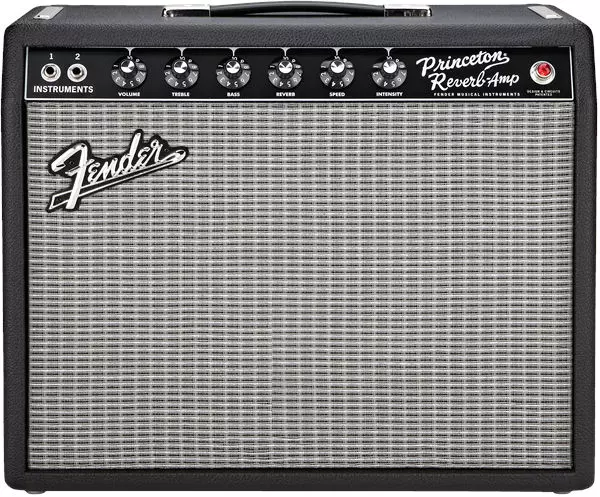
In 1940, Leo Fender came up with the legendary Princeton Reverb Amp, and later the Fender Deluxe. There were simple, clean, reliable amps for country and jazz musicians. Then, in the 1950s, distortion emerged as rock-and-roll guitarists pushed their tube amps beyond their limits to create a louder, grittier sound.
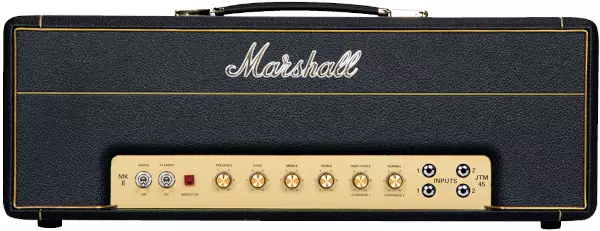
Then, in 1959, the Fender ’59 Bassman LTD was released. This originally 1950s tube bass amp, with a 4x10’’ configuration, represents one of the most recorded and influential amplifiers in rock history due to its mellow dynamics and tube saturation. This inspired Jim Marshall to create the JTM45 in 1962, which offered a nastier, more aggressive sound.
In 1965, the 100w Super Lead “Plexi” paired with a 4x12'' speaker cabinet gave rise to the Marshall stack that Hendrix used in Woodstock. Alongside, Vox created the Vox AC30, a crystal-clear-sounding tube amp behind the Beatles and Queen. Afterwards, in the U.S., Mesa Boogie arrived in the 1970s, and was used by Santana, Metallica and then Petrucci and Mastodon, just to name a few.
Rise in Popularity of Solid-State Amps
In the 1980s, solid-state amps competed as a cheaper, lighter, and less likely to catch fire option than tube amps; they rely on transistors and semiconductor circuits to amplify the electrical signal. Amps like the Roland Jazz were a heresy for purists because they didn’t have the same warmth and harmonic richness as an original tube amp.
On the other hand, solid-state amplifiers deliver a more accurate, transparent, clinical sound, with tighter bass and better transient speed. After the 2000s, digital modelling amps were created to emulate dozens of legendary tones, but they can’t replicate the physical experience of hearing or playing through a real amp.
It is also worth mentioning that there are Hybrid amps for both guitar and bass that combine vacuum-tube preamps with solid-state (transistor) power amps. This design allowed the warm sound of the tube in the preamp stage, and the efficiency of the transistors in the power stage.
Electric Bass Amps
The history of the electric bass began with the Audiovox Model 936, designed by Paul Tutmarc to accompany the Audiovox Model 736, the first solid-body electric bass.
Afterwards, Everett Hull created the “amplified peg,” which consisted of a microphone attached to the endpin of a double bass in 1948. Then, they released the Super 800 amp in 1949, and in 1952, Leo Fender created the first mass-produced Bassman.
Bass amps differ from electric guitar amps because they need more power to amplify the low-frequency range. Also, the power required for a tube amp differs from that of a solid-state amp. 100 watts in a bass tube amp is more than enough for a live gig, but for solid-state amps, it is recommended to have at least 300 watts to provide sufficient headroom and clear low-frequency response.
Bass Amp Options
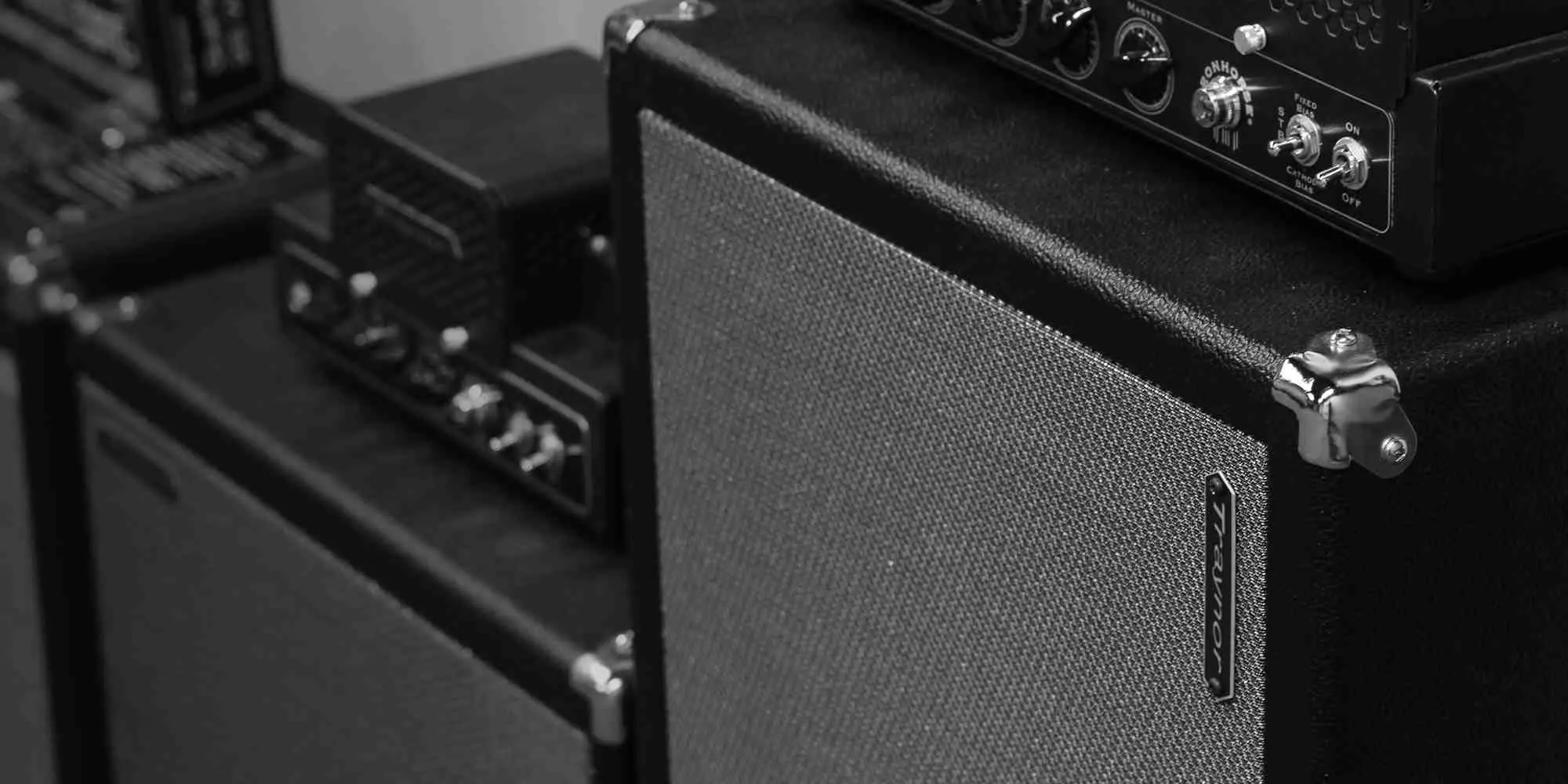
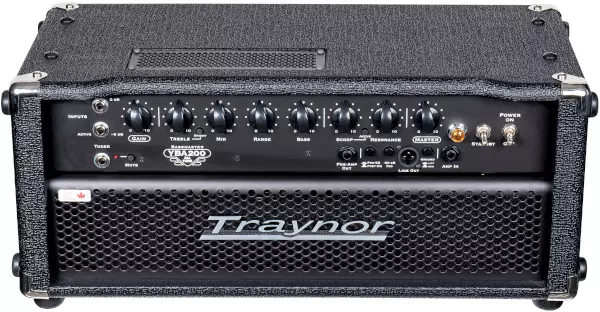
Traynor offers excellent options for both tube and solid-state amps. The YBA200-2 is an excellent 200-watt tube head amp option. It delivers the warmness of the tube tones and is incredibly lightweight for a tube amp (under 41lb). It includes 3-band Master EQ with range control, innovative scoop and resonance controls, 1/4-inch tuner output with system mute switch, switchable pre/post XLR D.I. out with Ground Lift and 20dB Pad, and a switchable 4- or 8-ohm power impedance mode.
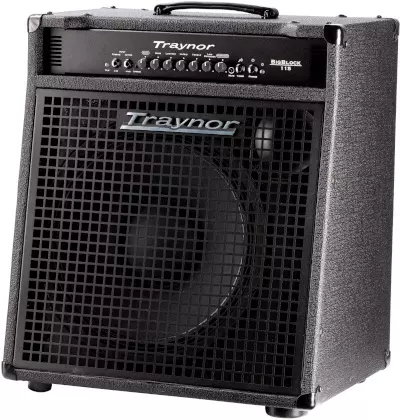
As a solid-state option, we have the Traynor BB115, a 400-watt featuring a 15’’ neodymium woofer and a 4-band EQ with a low-frequency expander, capable of reaching 800 watts with an extension cabinet. It also includes a defeatable tweeter with an on/off switch, a tuner mute switch, and a selectable pre- or post-EQ XLR D.I. output to send a signal to the FOH or use as a pre-master signal for your personal in-ear monitor.
Acoustic Guitar Amplifiers
The first dedicated acoustic guitar amp was created in the 1970s, following the invention of the piezoelectric pickup, which responds to physical stress and vibration rather than to sound moving through the air. Before, guitars were prone to feedback because their hollow bodies acted like acoustic microphones, resonating with the amplifier.
There are a lot of variables to consider when choosing the right type of acoustic guitar amp. Depending on whether you need it for either home practice, as a personal monitor, or for small or large gigs. They also offer battery power options and built-in FX, such as reverb and delay, which are ideal for a busking musician.
Acoustic Guitar Amp Options
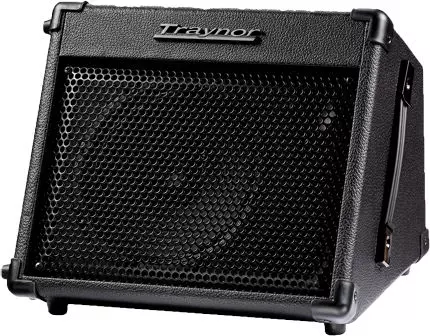
As an entry-level option, we have the Traynor TVM15. This battery-powered speaker, with a battery life of 4 to 5 hours at high volume, delivers 15 watts of power, ideal for small coffee shops, rehearsals, or busking. It includes two input channels: one XLR input for a microphone and a second 1/4-inch input for a guitar. It also includes an aux input to play your smartphone or laptop. All for a price range under $300 Canadian.
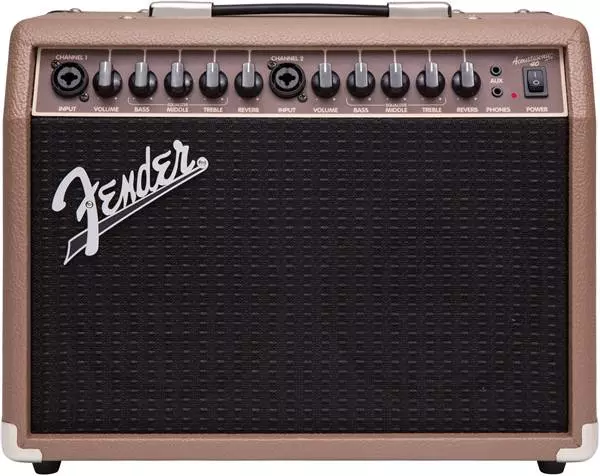
A step above is the Fender Acoustasonic 40, which offers 40 watts of power for an acoustic-electric guitar and microphone. It has two channels with independent EQ and reverb per channel, and one aux input with a headphone output, so you can practice at home without disturbing the neighbours. It is designed for small- to medium-sized venues for a PA or onstage monitor, such as a small restaurant. In addition, it includes a balanced XLR D.I. out.
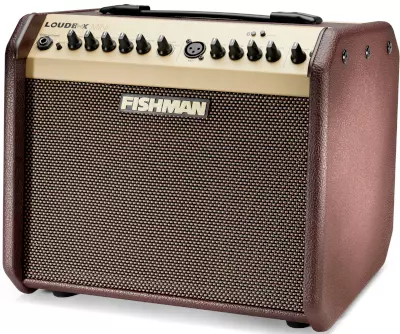
Lastly, one of the best-selling acoustic guitar amps is the Fishman Loudbox Mini with Bluetooth. This speaker delivers 60 watts of power and has two channels. The amp features digital reverb and chorus for the guitar and reverb for the microphone; the speaker also has an aux input and a balanced XLR D.I. out. Also, the speaker includes a phase switch, designed to avoid feedback.
Finding the Right Guitar Amplifier
Choosing the right guitar amplifier comes down to your playing style, the sound you're after, and where you'll be using it. Whether you prefer the tone of a tube amp, a solid-state model, a modelling amp, or a hybrid design, understanding the strengths of each will help make a more confident decision and get the most from your guitar.
When you're ready to upgrade your setup, explore Long & McQuade's extensive selection of guitar amplifiers for every skill level and budget. Find trusted brands and expert support at one of our physical stores to help you choose the right amp today.